Palmitic Acid → Copper(2+) dihexadecanoate
Reaction equation

[C:1]([OH:18])(=[O:17])[CH2:2][CH2:3][CH2:4][CH2:5][CH2:6][CH2:7][CH2:8][CH2:9][CH2:10][CH2:11][CH2:12][CH2:13][CH2:14][CH2:15][CH3:16].[Cu:19]>O.[Cl-].C([N+](CC)(CC)CC)C.CO>[C:1]([O-:18])(=[O:17])[CH2:2][CH2:3][CH2:4][CH2:5][CH2:6][CH2:7][CH2:8][CH2:9][CH2:10][CH2:11][CH2:12][CH2:13][CH2:14][CH2:15][CH3:16].[Cu+2:19].[C:1]([O-:18])(=[O:17])[CH2:2][CH2:3][CH2:4][CH2:5][CH2:6][CH2:7][CH2:8][CH2:9][CH2:10][CH2:11][CH2:12][CH2:13][CH2:14][CH2:15][CH3:16]Participants
5
Reactant 2
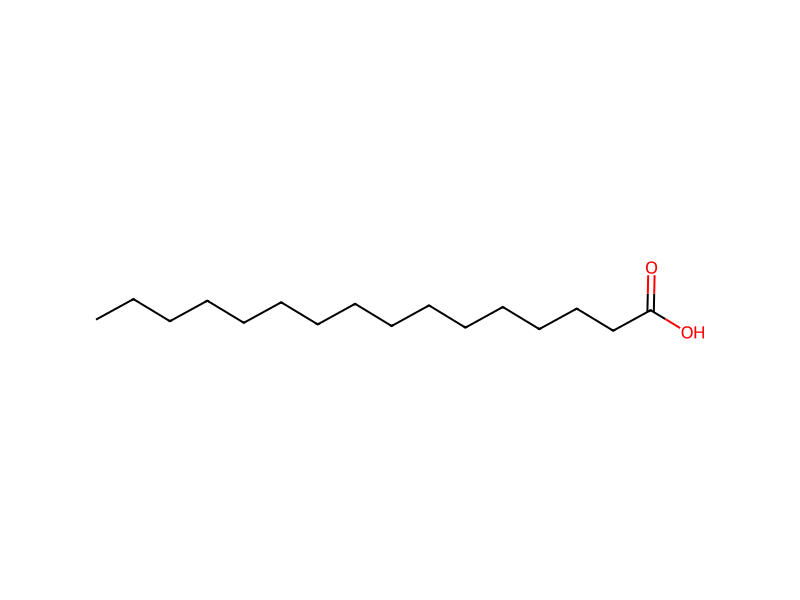

Product 1

Reagents, catalysts & solvents 2


Procedure
To a reaction flask was charged 20.77 g (0.08 mole) of palmitic acid, 60 g methanol and 0.50 g of tetraethylammonium chloride hydrate. Copper foil was used as the anode and a graphite rod as the cathode. A blue solid precipitated during the reaction which had to be removed from the anode surface. After passing 9,690 coulombs of electricity, 3.77 g (0.05 g mole) of copper was consumed. The solid was then filtered and dried to give a blue solid material of copper palmitate containing 15.1% copper.
Workup
- customA blue solid precipitated during the reaction which
- customto be removed from the anode surface
- customwas consumed
- filtrationThe solid was then filtered
- customdried
Sources & evidence
- ORD record
- ord-92b80bb775574f53af0e660f65f5dc54
- Source dataset
- uspto-grants-1995_08
- Patent number
- US05443698
Reaction notes
Loading…