Levulinic Acid → Cesium levulinate
Reaction equation

[C:1]([OH:8])(=[O:7])[CH2:2][CH2:3][C:4]([CH3:6])=[O:5].[OH-].[Cs+:10]>O>[C:1]([O-:8])(=[O:7])[CH2:2][CH2:3][C:4]([CH3:6])=[O:5].[Cs+:10]Participants
4
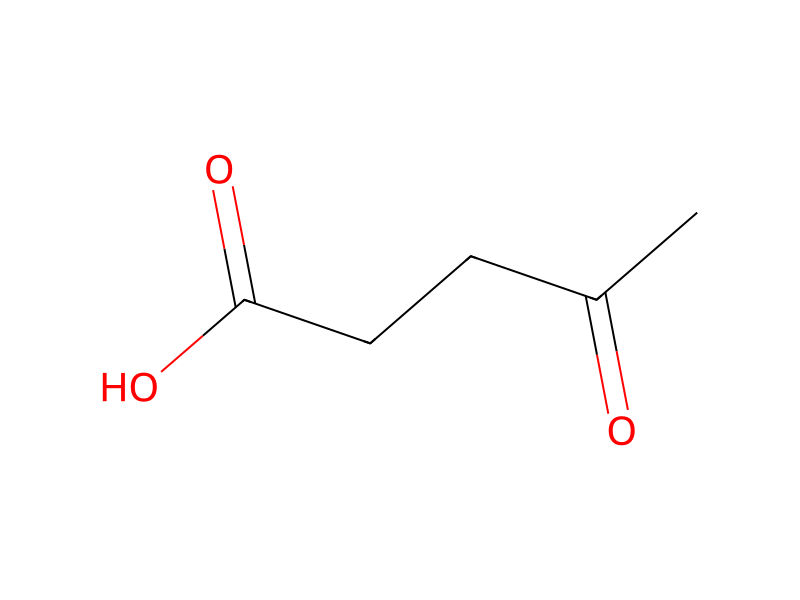


Reagents, catalysts & solvents 1

Conditions
- Temperature
- 65 °C
Procedure
46.9 gr. of 99% pure levulinic acid is sluurried in 100 cc. distilled water. 97.3 g. of a 4.22 molar, pure cesium hydroxide solution is added and the temperature is raised to 65° C. to obtain complete solution. The solution is filtered through No. 40 filter paper to remove dust, etc. The solution is then evaporated on a hot plate to 200 g., which gives a 2 molar concentration, and it is then bottled. These materials are readily compounded into highly stable solutions which can be readily coated onto a variety of substrates. The preparation of a sensor solution of cesium benzoylpropionate, which triggers optically at 35% RH at 20° C. (when applied as a film); typifies the preparation of sensors useful for lower RH sensing.
Workup
- customto obtain complete solution
- filtrationThe solution is filtered through No
- filtration40 filter paper
- customto remove dust, etc. The solution
- customis then evaporated on a hot plate to 200 g
- custom, which gives
- concentrationa 2 molar concentration, and it
- customThe preparation of a sensor solution of cesium benzoylpropionate, which
- customtriggers optically at 35% RH at 20° C.
- customthe preparation of sensors useful for lower RH sensing
Sources & evidence
- ORD record
- ord-d13e1c25456248979d2c44affae8a1f5
- Source dataset
- uspto-grants-1995_08
- Patent number
- US05443753
Reaction notes
Loading…