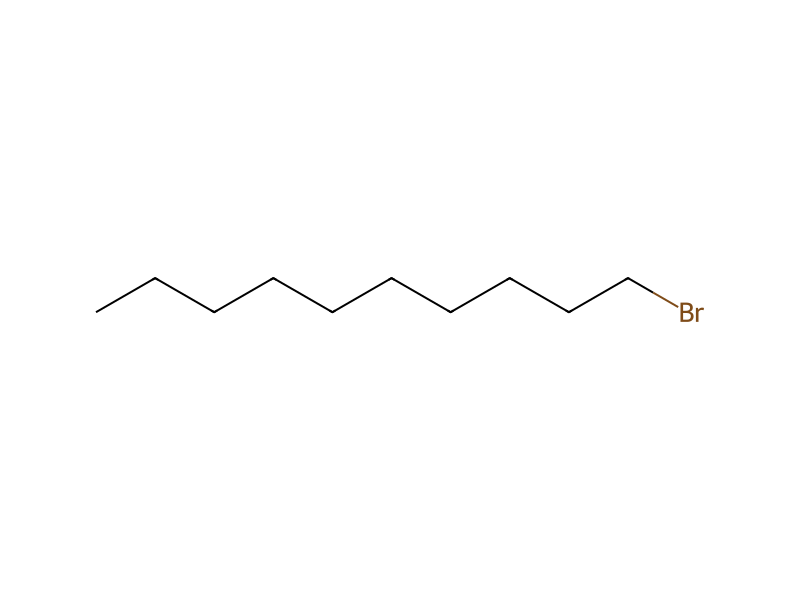
1-Bromodecane → 1,2-Bis(decyloxy)-4-nitrobenzene
Reaction equation

[N+:1]([C:4]1[CH:5]=[C:6]([OH:11])[C:7](=[CH:9][CH:10]=1)[OH:8])([O-:3])=[O:2].Br[CH2:13][CH2:14][CH2:15][CH2:16][CH2:17][CH2:18][CH2:19][CH2:20][CH2:21][CH3:22]>>[CH2:13]([O:11][C:6]1[CH:5]=[C:4]([N+:1]([O-:3])=[O:2])[CH:10]=[CH:9][C:7]=1[O:8][CH2:13][CH2:14][CH2:15][CH2:16][CH2:17][CH2:18][CH2:19][CH2:20][CH2:21][CH3:22])[CH2:14][CH2:15][CH2:16][CH2:17][CH2:18][CH2:19][CH2:20][CH2:21][CH3:22]Participants
3


Procedure
Using this procedure, the reaction of 4-nitrocatechol with 1-bromodecane gave 3,4-bis(decyloxy)nitrobenzene (mp 60°-61°, Anal. Calcd for C26H45NO4 : C, 71.68; H, 10.41; N, 3.22. Found: C, 71.63; H, 10.55; N, 3.21.
Sources & evidence
- ORD record
- ord-b5ef6240bd6f4d0382015f5a9f6f85a3
- Source dataset
- uspto-grants-1995_08
- Patent number
- US05446189
Reaction notes
Loading…