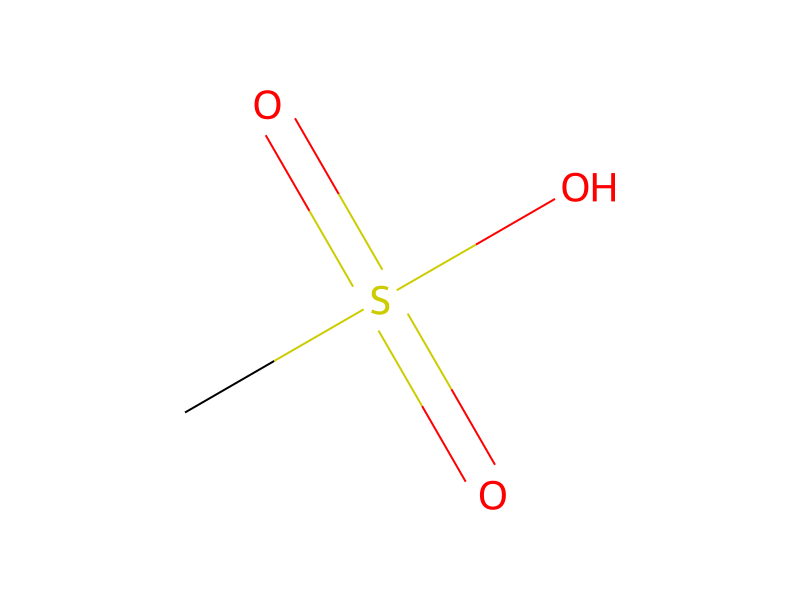
Methanesulfonic Acid → HCID 178516451, compound
Reaction equation

[Cl:1][C:2]1[CH:24]=[CH:23][C:22]([N+:25]([O-:27])=[O:26])=[CH:21][C:3]=1[NH:4][C:5](=[N:19]O)[CH2:6][C:7]([NH:9][C:10]1[C:15]([Cl:16])=[CH:14][C:13]([Cl:17])=[CH:12][C:11]=1[Cl:18])=[O:8].C(OC(=O)C)(=O)C.CS(O)(=O)=O.C(N(C1CC(=O)N(C2C(Cl)=CC(Cl)=CC=2Cl)N=1)C1C=C([N+]([O-])=O)C=CC=1Cl)(=O)C.C(N(C1C=C(OC(=O)C)N(C2C(Cl)=CC(Cl)=CC=2Cl)N=1)C1C=C([N+]([O-])=O)C=CC=1Cl)(=O)C>O.C(O)(=O)C>[Cl:1][C:2]1[CH:24]=[CH:23][C:22]([N+:25]([O-:27])=[O:26])=[CH:21][C:3]=1[NH:4][C:5]1[CH2:6][C:7](=[O:8])[N:9]([C:10]2[C:15]([Cl:16])=[CH:14][C:13]([Cl:17])=[CH:12][C:11]=2[Cl:18])[N:19]=1Participants
Reactant 5



Product 1

Reagents, catalysts & solvents 2


Procedure
In a 5 L three-necked flask, equipped with a stirrer, a reflux condenser, and a thermometer, were placed 226 g of 3-(2-chloro-5-nitroanilino)-3-oximino-N-(2,4,6-trichlorophenyl)propionamide, 2 L of glacial acetic acid, and 500 mL of acetic anhydride. The mixture was stirred at room temperature for 18 hours. The yellow color of the slurry turned almost colorless, and thin layer chromatography (TLC) showed that the O-acetyloximino derivative was the sole product. To the reaction mixture was added 50 g of methanesulfonic acid and the mixture was heated as quickly as possible to its boiling point, 117°-120° C., and kept under reflux for 10 minutes. TLC showed that the reaction was essentially complete at that time and gave a mixture of 3-(N-acetyl-2-chloro-5-nitroanilino)-1-(2,4,6-trichlorophenyl)-2-pyrazolin-5-one and 3-(N-acetyl-2-chloro-5-nitroanilino)-5-acetyloxy-1-(2,4,6-trichlorophenyl)pyrazole. At the end of the heating period, the reflux condenser was quickly replaced with a distillation head, and a water-aspirator vacuum was carefully applied to distill off the solvent as well as to cool down the mixture to 50°-60° C. The distillation of solvent was continued keeping the pot temperature at 50°-60° C. until no more distillate came off. The resulting dark greenish brown viscous oil was dissolved in 2 L of methanol with heat, and 500 mL of concentrated hydrochloric acid in water was added slowly through a dropping funnel. The mixture was heated under reflux for 1 hour, cooled to room temperature, and then allowed to stand at room temperature overnight. The solid was collected, washed with methanol and water, and dried. There was obtained 91 g (42%) of the desired 3-(2-chloro-5-nitroanilino)-1-(2,4,6-trichlorophenyl)-2-pyrazolin-5-one, having a melting point of 278°-280° C.
Workup
- customIn a 5 L three-necked flask, equipped with a stirrer, a reflux condenser
- temperaturethe mixture was heated as quickly as possible to its boiling point, 117°-120° C.
- temperatureunder reflux for 10 minutes
- customgave
- distillationto distill off the solvent as well as
- temperatureto cool down the mixture to 50°-60° C
- distillationThe distillation of solvent
- customat 50°-60° C.
- dissolutionThe resulting dark greenish brown viscous oil was dissolved in 2 L of methanol
- temperaturewith heat
- addition500 mL of concentrated hydrochloric acid in water was added slowly through a dropping funnel
- temperatureThe mixture was heated
- temperatureunder reflux for 1 hour
- temperaturecooled to room temperature
- waitto stand at room temperature overnight
- customThe solid was collected
- washwashed with methanol and water
- customdried
Sources & evidence
- ORD record
- ord-6eb33c80f4d249ed8b7a6cca7db1b09a
- Source dataset
- uspto-grants-1983_02
- Patent number
- US04374253
Reaction notes
Loading…