Ammonium Chloride → HCID 12992805, compound
Reaction equation

[OH:1][C:2]1([C:8]2[S:9][CH:10]=[CH:11][N:12]=2)[CH2:7][CH2:6][CH2:5][CH2:4][CH2:3]1.CCN(C(C)C)C(C)C.[CH3:22][Si:23]([CH3:30])([CH3:29])[CH2:24][CH2:25][O:26][CH2:27]Cl.[NH4+].[Cl-]>ClCCl>[CH3:22][Si:23]([CH3:30])([CH3:29])[CH2:24][CH2:25][O:26][CH2:27][O:1][C:2]1([C:8]2[S:9][CH:10]=[CH:11][N:12]=2)[CH2:3][CH2:4][CH2:5][CH2:6][CH2:7]1Participants
6


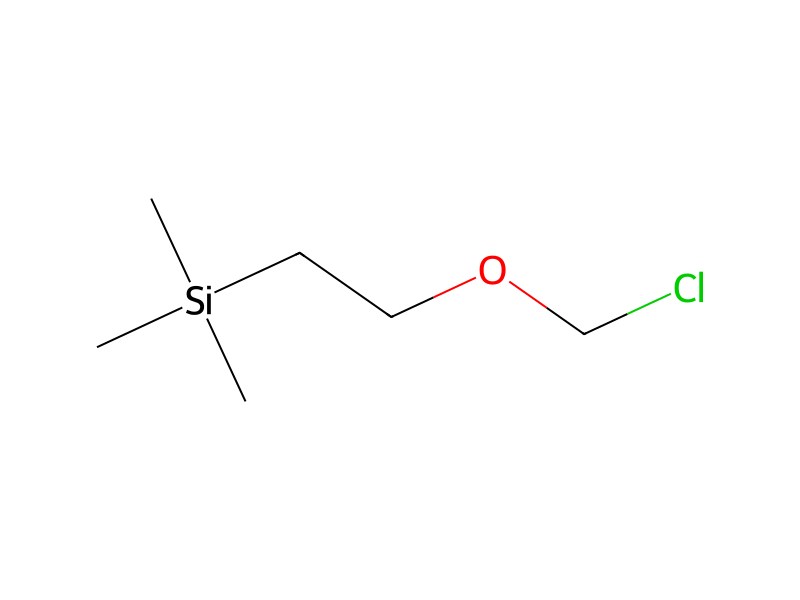



Conditions
- Temperature
- 0 °C
Procedure
To a solution of the alcohol 2-[(1-Hydroxy)cyclohexyl]thiazole from Step 1 (5.8 g, 32 mmol) and Hunig's base (14 mL, 67 mmol) in dichloromethane (100 mL) at 0° C. was added 2-(trimethylsilyl)ethoxymethyl chloride (6.5 mL, 36.7 mmol). The resulting solution was stirred at 0° C. for 15 min, was heated at reflux temperature for 15 h and then cooled to room temperature. Sat. aq. NH4Cl was added and the resulting mixture was extracted with dichloromethane (3×). The combined organics were washed with water, brine, dried (MgSO4) and concentrated. Flash chromatography of the residue (silica gel; hexane/ethyl acetate 7:3) provided 2-{1-[(2-Trimethylsilylethoxy)methoxy]cyclohexyl}thiazole (8 g).
Workup
- temperaturewas heated
- temperatureat reflux temperature for 15 h
- temperaturecooled to room temperature
- extractionthe resulting mixture was extracted with dichloromethane (3×)
- washThe combined organics were washed with water, brine
- dry with materialdried (MgSO4)
- concentrationconcentrated
Sources & evidence
- ORD record
- ord-b49c1be2a69541f0b50ed91a5c3b9c02
- Source dataset
- uspto-grants-2005_01
- Patent number
- US06841564B2
Reaction notes
Loading…