Benzene → Cumene
Reaction equation

[CH:1](O)([CH3:3])[CH3:2].[CH:5]1[CH:10]=[CH:9][CH:8]=[CH:7][CH:6]=1>>[C:5]1([CH:1]([CH3:3])[CH3:2])[CH:10]=[CH:9][CH:8]=[CH:7][CH:6]=1Participants
Reactant 2


Product 1
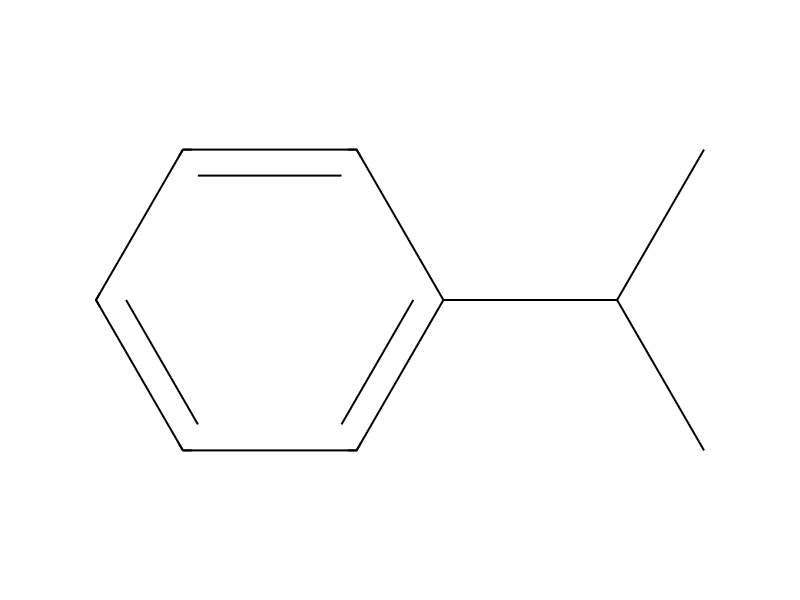
Procedure
The isopropanol obtained in this way was fed directly into a circulation reactor into which benzene was also fed. The alkylation took place in this circulation reactor at a pressure of about 45 bar abs, and the reactor had a temperature profile of from 200 to 230° C. In a downstream phase separation vessel, the reaction mixture was separated into an organic phase and an aqueous phase. The aqueous phase, which is saturated with organic constituents, was distilled and the water-isopropanol azeotrope which was distilled off was recirculated to the circulation reactor. The organic phase from the phase separation vessel was partly recirculated to the circulation reactor, with the circulation ratio of recycled organic parts of the reaction mixture to starting materials fed into the reactor being 5:1. The other part of the organic phase of the reaction mixture was passed to three distillation columns connected in series. In the first distillation column, low boilers such as propene, benzene and unreacted isopropanol were separated off from the organic phase. These low boilers were fed back into the circulation reactor as alkylation reagent. The bottoms from this column were passed to the next column in which cumene was separated from the remaining organic phase. This cumene was fed directly to the oxidation for preparing cumene hydroperoxide (CHP). The bottoms from the distillation column were fed into the third distillation column in which diisopropylbenzene and/or polyisopropylbenzenes were separated from the remaining organic, high-boiling compounds. The bottoms were passed to thermal utilization. The multiply alkylated benzenes were conveyed to a tube reactor into which benzene was also fed. A transalkylation reaction was carried out at a temperature of about 220° C. and a pressure of 40 bar abs in the presence of zeolites as catalyst to form cumene from benzene and multiply alkylated benzenes. The reaction mixture from this reactor was conveyed back to the first distillation column after the alkylation reactor so as to be able to separate unreacted benzene from the reaction mixture once again, then to separate the cumene from the reaction mixture in the next distillation column and to feed it to the oxidation.
Workup
- customof from 200 to 230° C
- customIn a downstream phase separation vessel
- customthe reaction mixture was separated into an organic phase
- distillationwas distilled
- distillationthe water-isopropanol azeotrope which was distilled off
- customThe organic phase from the phase separation vessel
- distillationThe other part of the organic phase of the reaction mixture was passed to three distillation columns
- distillationIn the first distillation column, low boilers such as propene, benzene and unreacted isopropanol
- customwere separated off from the organic phase
- customwas separated from the remaining organic phase
- customThis cumene was fed directly to the oxidation for preparing cumene hydroperoxide (CHP)
- distillationThe bottoms from the distillation column
- distillationwere fed into the third distillation column in which diisopropylbenzene and/or polyisopropylbenzenes
- customwere separated from the remaining organic, high-boiling compounds
- customThe multiply alkylated benzenes were conveyed to a tube reactor into which benzene
- customA transalkylation reaction
- customwas carried out at a temperature of about 220° C.
Sources & evidence
- ORD record
- ord-577e4436b115410cb2e93fdfc3df345e
- Source dataset
- uspto-grants-2005_01
- Patent number
- US06841704B2
Reaction notes
Loading…