Phenol → Acetic acid, 2-phenoxy-, ethyl ester
Reaction equation

[C:1]1([OH:7])[CH:6]=[CH:5][CH:4]=[CH:3][CH:2]=1.[OH-].[Na+].[I-].[Na+].Cl[CH2:13][C:14]([O:16][CH2:17][CH3:18])=[O:15].CC1C=C(OC)C=CC=1>CCCCCCCC[N+](CCCCCCCC)(CCCCCCCC)C.[Cl-].O>[O:7]([CH2:13][C:14]([O:16][CH2:17][CH3:18])=[O:15])[C:1]1[CH:6]=[CH:5][CH:4]=[CH:3][CH:2]=1Participants



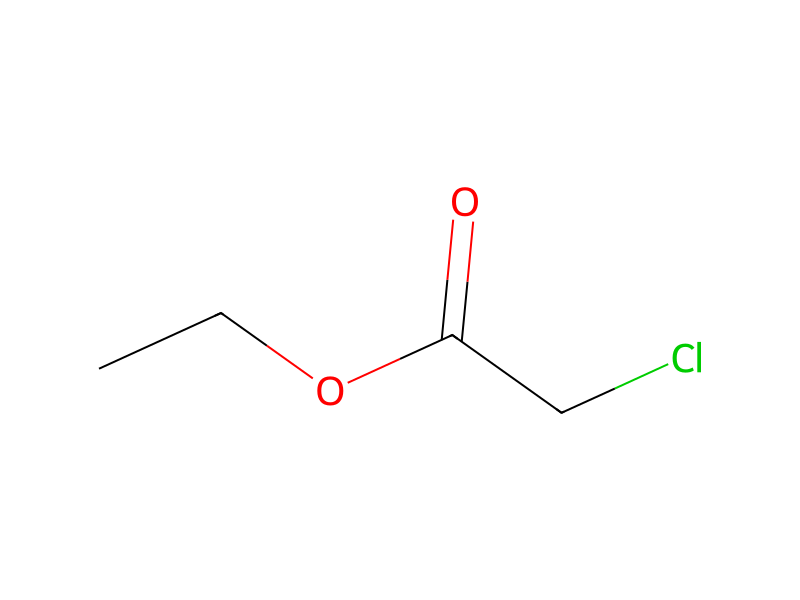




Procedure
The three-necked 500 mL flask was filled with phenol (1.89 g, 20 millimoles, Aldrich, 99+%), sodium hydroxide (1.76 g, 50% w/w solution in water, 22 millimoles, Aldrich), sodium iodide (0.18 g, 1 millimole, Aldrich, 98%), and water (196.78 g) and immersed in the water bath kept at 60° C. The excess molar concentration of sodium hydroxide was 0.10. The mixture was stirred mechanically at 600 rpm. Next, the organic phase consisting of ethyl chloroacetate (9.84 g, 80 millimoles, Aldrich, 99%), Aliquat 336 (0.834 g, 2 millimoles, and 3-methylanisole (GC standard, 0.490 g, 4 millimoles, Aldrich, 99%) was introduced into the flask. The organic phase: aqueous phase weight ratio was 1:18. The stirring was continued at 60° C. for several hours. The aliquots were taken every 60-90 minutes and briefly centrifuged. The organic phase was injected into the GC instrument. The yield of ethyl phnoxyacetate after 390 minutes retention time was 18%.
Workup
- customkept at 60° C
- concentrationThe excess molar concentration of sodium hydroxide
- additionwas introduced into the flask
- waitThe stirring was continued at 60° C. for several hours
- waitThe yield of ethyl phnoxyacetate after 390 minutes retention time was 18%
Sources & evidence
- ORD record
- ord-60c30701bc754283ac26758696254b32
- Source dataset
- uspto-grants-2005_01
- Patent number
- US06846946B2
Reaction notes
Loading…