Ethyl 2-chloroacetoacetate → HCID 14500704, compound
Reaction equation

[C:1]1([CH2:7][CH2:8][NH:9][C:10](=S)[NH:11][NH2:12])[CH:6]=[CH:5][CH:4]=[CH:3][CH:2]=1.Cl[CH:15]([C:21]([CH3:23])=O)[C:16]([O:18][CH2:19][CH3:20])=[O:17]>C(O)C>[CH3:23][C:21]1[NH:12][N:11]=[C:10]([NH:9][CH2:8][CH2:7][C:1]2[CH:6]=[CH:5][CH:4]=[CH:3][CH:2]=2)[C:15]=1[C:16]([O:18][CH2:19][CH3:20])=[O:17]Participants
Reactant 2
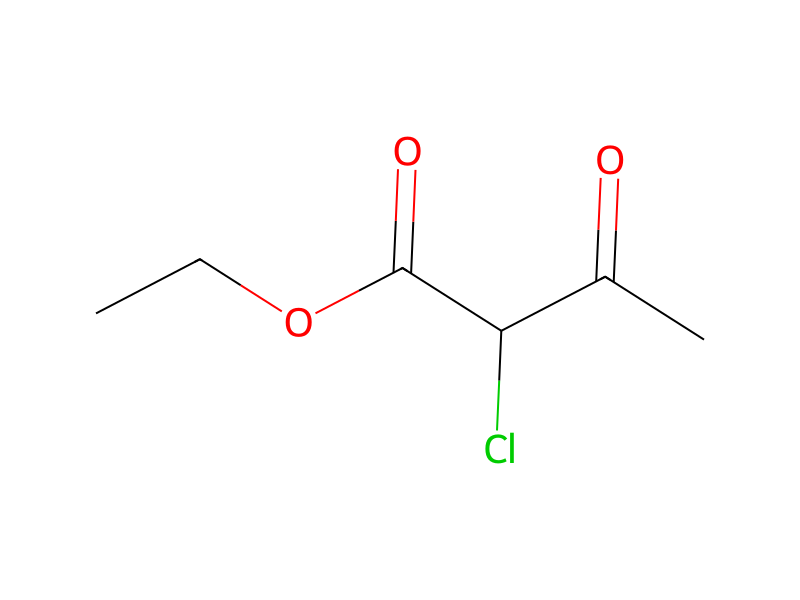

Product 1

Reagents, catalysts & solvents 1

Procedure
A stirred slurry of 33.1 g (0.17 mole) of 4-phenylethyl-3-thiosemicarbazide in 500 mL of absolute ethanol under nitrogen atmosphere was treated with 29 g (0.17 mole) of ethyl 2-chloroacetoacetate, stirred at ambient temperature for ~72 hr, heated to reflux to dissolve most materials, and filtered hot. The filtrate was concentrated in vacuo to give a reddish oil, 71 g. The residue was chromatographed on 800 g Florosil® and eluted first with benzene to remove a yellow band (sulfur) followed by an acetone/benzene gradient which gave two main fractions. These two fractions were combined, and concentrated to give a yellow oil which solidified. Recrystallization (twice) from ligroin gave a fluffy white crystalline product, with small spots of green-yellow color, 12.1 g, mp 138°-139° C.
Workup
- temperatureheated
- temperatureto reflux
- dissolutionto dissolve most materials
- filtrationfiltered hot
- concentrationThe filtrate was concentrated in vacuo
- customto give a reddish oil, 71 g
- customThe residue was chromatographed on 800 g Florosil®
- washeluted first with benzene
- customto remove a yellow band (sulfur)
- customgave two main fractions
- concentrationconcentrated
- customto give a yellow oil which
- customRecrystallization (twice) from ligroin
- customgave a fluffy white crystalline product
Sources & evidence
- ORD record
- ord-226e17577cfd46329a94bdd85f832c7e
- Source dataset
- uspto-grants-1989_05
- Patent number
- US04826866
Reaction notes
Loading…