Pyrrole → HCID 14500627, compound
Reaction equation

[N+:1]([C:4]1[CH:5]=[C:6]([CH:10]=[CH:11][CH:12]=1)[C:7](Cl)=[O:8])([O-:3])=[O:2].[NH:13]1[CH:17]=[CH:16][CH:15]=[CH:14]1>C1(C)C=CC=CC=1>[N+:1]([C:4]1[CH:5]=[C:6]([CH:10]=[CH:11][CH:12]=1)[C:7]([C:14]1[NH:13][CH:17]=[CH:16][CH:15]=1)=[O:8])([O-:3])=[O:2]Participants
4
Reactant 2
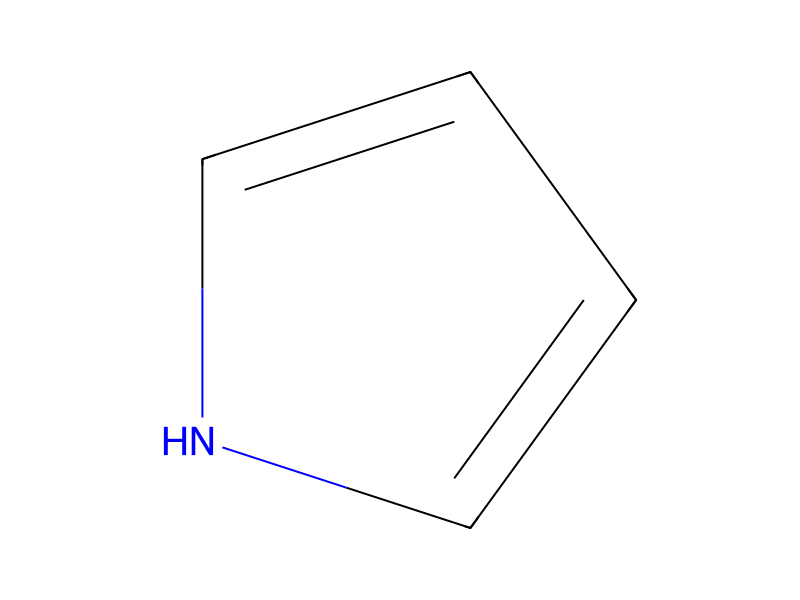

Product 1

Reagents, catalysts & solvents 1

Procedure
Alternatively, about 0.5 to 2 molar equivalents of m-nitrobenzoyl chloride (Formula ;b 7 where Z is chloro) (available from Aldrich) is added to pyrrole or an optionally substituted pyrrole (represented by Formula 8, prepared, e.g., as described in Reaction Schemes 1 and 2) dissolved in an inert organic solvent (preferably toluene) and heated, preferably to the reflux temperature of the solvent used, in an inert atmosphere (e.g., under nitrogen). The reaction takes place over a period of about 1 to 30 hours, preferably 10 to 25 hours, and most preferably about 18 hours. The 2-(3'-nitrobenzoyl)pyrrole intermediate of Formula 9 is isolated and purified in the usual manner.
Workup
- temperatureheated, preferably to the reflux temperature of the solvent
- customof about 1 to 30 hours
- custompreferably 10 to 25 hours, and most preferably about 18 hours
Sources & evidence
- ORD record
- ord-2522a8d290254e0f9601257d24d2ace6
- Source dataset
- uspto-grants-1989_05
- Patent number
- US04826869
Reaction notes
Loading…