Sodium Fluoride → Ethyl 8-bromo-1-cyclopropyl-6,7-difluoro-1,4-dihydro-4-oxo-3-quinolinecarboxylate
Reaction equation

[Br:1][C:2]1[C:3](F)=[C:4]([CH:18]=[C:19]([F:22])[C:20]=1[F:21])[C:5]([C:7](=[CH:13][NH:14][CH:15]1[CH2:17][CH2:16]1)[C:8]([O:10][CH2:11][CH3:12])=[O:9])=[O:6].[F-].[Na+]>CN(C)C=O>[Br:1][C:2]1[C:20]([F:21])=[C:19]([F:22])[CH:18]=[C:4]2[C:3]=1[N:14]([CH:15]1[CH2:17][CH2:16]1)[CH:13]=[C:7]([C:8]([O:10][CH2:11][CH3:12])=[O:9])[C:5]2=[O:6]Participants
4
Reactant 2
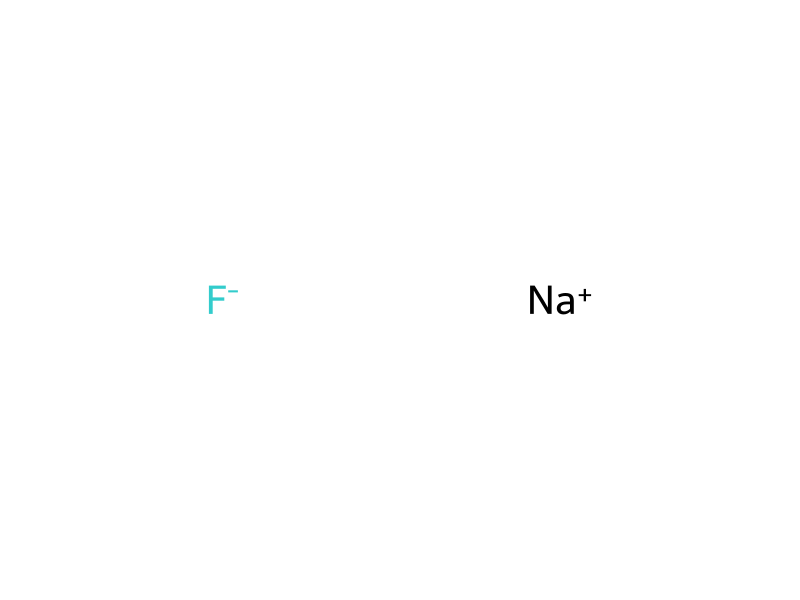

Product 1

Reagents, catalysts & solvents 1

Procedure
To a solution of ethyl 2-(3-bromo-2,4,5-trifluorobenzoyl)-3-cyclopropylaminoacrylate (1.35 g) in anhydrous dimethylformamide (5 ml) was added sodium fluoride (0.23 g). The mixture was stirred at 97°-108° C. for 7.5 hours, and then poured into ice water (50 ml) and the resulting precipitate was collected by filtration, washed with water and recrystallized from dichloro-methane-n-hexane to give the title compound (1.05 g), mp 163.5°-168° C. as colorless prisms.
Workup
- filtrationthe resulting precipitate was collected by filtration
- washwashed with water
- customrecrystallized from dichloro-methane-n-hexane
Sources & evidence
- ORD record
- ord-fd6e133ef60f483c9919d3732466dd31
- Source dataset
- uspto-grants-1989_05
- Patent number
- US04826982
Reaction notes
Loading…