Benzyl mercaptan → HCID 86743023, compound
Reaction equation

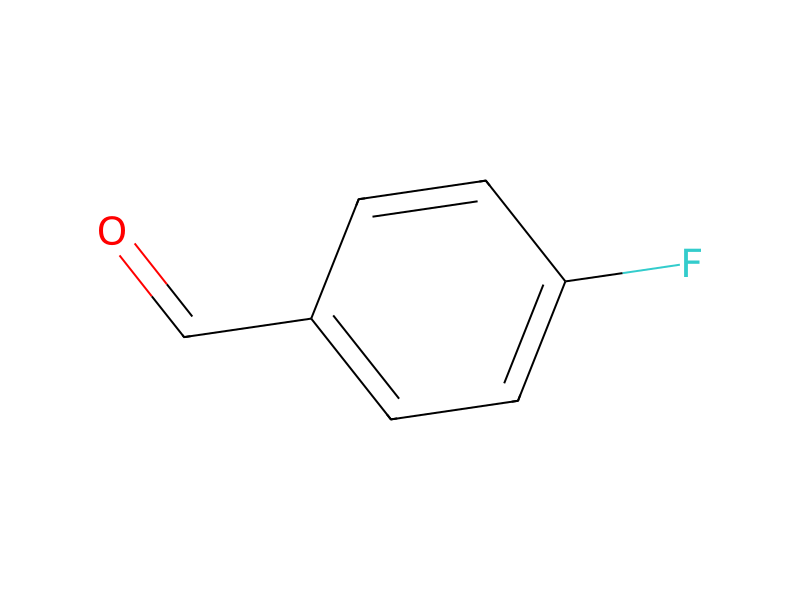
[CH2:1]([SH:8])[C:2]1[CH:7]=[CH:6][CH:5]=[CH:4][CH:3]=1.C([Li])CCC.[F:14][C:15]1[CH:22]=[CH:21][C:18](C=O)=[CH:17][CH:16]=1.C1C[O:26][CH2:25]C1>>[F:14][C:15]1[CH:22]=[CH:21][C:18]([C:3]2[CH:4]=[CH:5][CH:6]=[CH:7][C:2]=2[CH:1]([SH:8])[CH2:25][OH:26])=[CH:17][CH:16]=1Participants




Conditions
- Temperature
- 0 °C
Procedure
To a solution of 12.4 g (0.1 mole) of benzyl mercaptan (ie, benzenemethanethiol) in 150 ml of THF at 0° C. under moisture-free conditions, was added, dropwise, 14 g (0.22 mole) of n-butyllithium (1.6 m in hexane). After stirring at 0° C. for 4 hours (orange precipitate forms), the mixture was cooled to -25°. To this mixture was added a solution of 12.4 g (0.1 mole) of p-fluorobenzaldehyde in 100 ml of THF, dropwise. After stirring at -25° C. for 1 hour, a yellow solution occurs. The reaction was quenched with saturated aqueous ammonium chloride and the organic material was extracted once with MTBE and then once with methylene chloride. The organic solutions were combined and dried, and the solvent was removed under reduced pressure to give 25 g of the title product of this step as an oil (80:20 mixture of isomers), which was used in the next step without any further purification.
Workup
- temperaturethe mixture was cooled to -25°
- stirringAfter stirring at -25° C. for 1 hour
- customThe reaction was quenched with saturated aqueous ammonium chloride
- extractionthe organic material was extracted once with MTBE
- customdried
- customthe solvent was removed under reduced pressure
Sources & evidence
- ORD record
- ord-2215d079f0804cf8a491e31fa8faf874
- Source dataset
- uspto-grants-1989_05
- Patent number
- US04829081
Reaction notes
Loading…