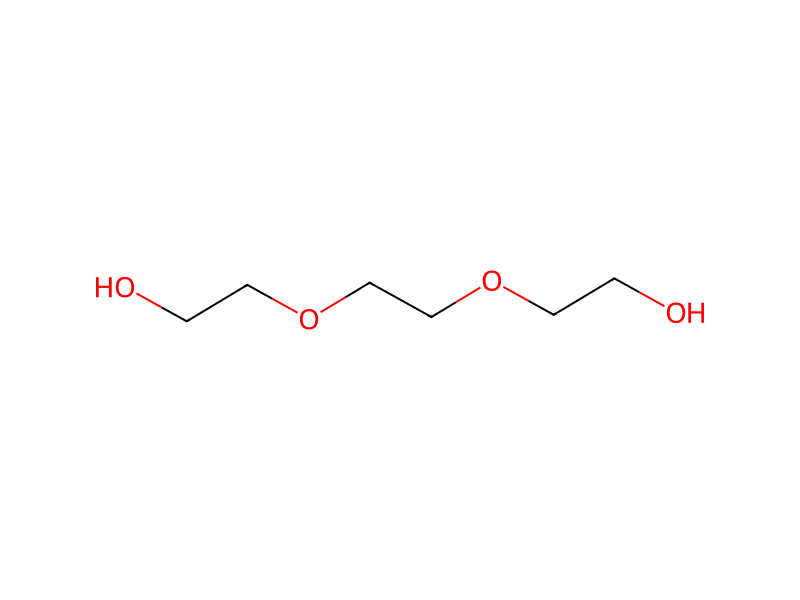
Triethylene Glycol → HCID 86743026, compound
Reaction equation

[CH2:1]([OH:10])[CH2:2][O:3][CH2:4][CH2:5][O:6][CH2:7][CH2:8][OH:9].[N+:11]([C:14]1[CH:22]=[CH:21][C:17]([C:18](Cl)=[O:19])=[CH:16][CH:15]=1)([O-:13])=[O:12].[C:23](=[O:26])(O)[O-].[Na+]>>[N+:11]([C:14]1[CH:22]=[CH:21][C:17]([C:18]([C:1]([OH:10])([C:23](=[O:26])[C:17]2[CH:21]=[CH:22][C:14]([N+:11]([O-:13])=[O:12])=[CH:15][CH:16]=2)[CH2:2][O:3][CH2:4][CH2:5][O:6][CH2:7][CH2:8][OH:9])=[O:19])=[CH:16][CH:15]=1)([O-:13])=[O:12]Participants
4



Procedure
Triethylene glycol (45 g, 0.3 mole) was treated with excess p-nitrobenzoyl chloride (116 g, 0.62 mole), following the general procedure outlined in Example 1, Part A. After treating with aqueous sodium bicarbonate to remove excess acid chloride, the product was recrystallized from ethyl acetate to give bis-(4-nitrobenzoyl)-triethylene glycol (115 g) as a pale yellow solid, m.p. 104°-105° C. The product was homogeneous by TLC.
Workup
- customto remove excess acid chloride
- customthe product was recrystallized from ethyl acetate
Sources & evidence
- ORD record
- ord-be7fbdf85a164ca8b56434f1656d92f6
- Source dataset
- uspto-grants-1989_05
- Patent number
- US04829099
Reaction notes
Loading…