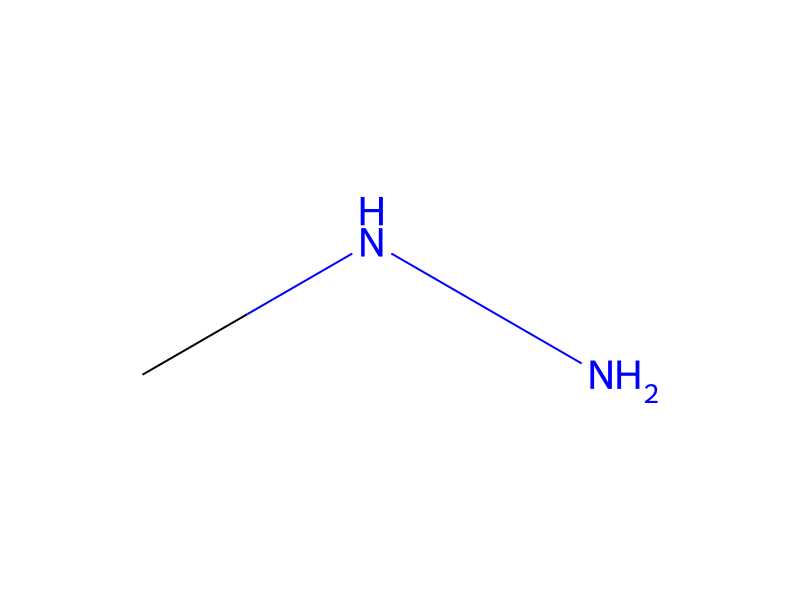
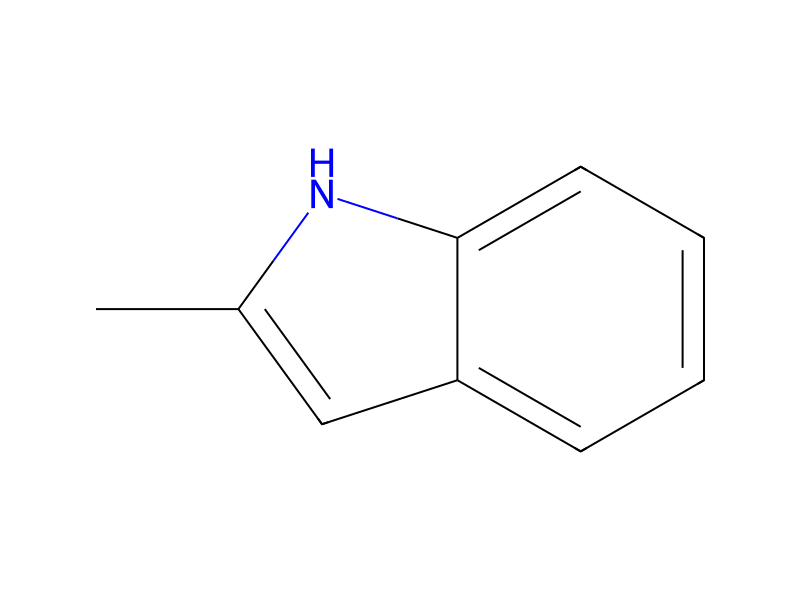
Methylhydrazine → 2-Methylindole
Reaction equation

[C:1]1([CH2:9]Br)[C:2](CBr)=[CH:3][CH:4]=[CH:5][CH:6]=1.CNN.C[N:15]1C=C2[C:17](C=CC=C2)=[CH:16]1>O=O>[CH3:17][C:16]1[NH:15][C:2]2[C:1]([CH:9]=1)=[CH:6][CH:5]=[CH:4][CH:3]=2Participants
Reactant 3


Product 1
Reagents, catalysts & solvents 1

Conditions
- Temperature
- 20 °C
Procedure
A 2-liter 4-neck flask equipped with a dropping funnel, a stirrer, a thermometer, and a nitrogen-introducing inlet was charged with 15.0 g (0.057 mole) of o-xylylene dibromide, and this o-xylylene dibromide was dissolved in 150 ml of oxygen-removed anhydrous diethyl ether. Then, 10.5 g (0.23 mole) of methylhydrazine was dropped into the solution with stirring at 20° C. over a period of 30 minutes, and the mixture was stirred at room temperature for 12 hours. The formed white precipitate was recovered by filtration and a 20% aqueous solution of caustic soda, which had been subjected to the oxygen-removing treatment, was added to the recovered solid. The mixture was then stirred for 3 hours in a nitrogen atmosphere. Then, the formed suspension was extracted with 150 ml of chloroform and the chloroform solution was washed twice with 100 ml of water, and the chloroform solution was dried with potassium carbonate and concentrated under a reduced pressure. The formed yellow solid was placed in a sublimation device and heated on an oil bath under a reduced pressure, and 2.6 (0.020 mole) of 2-methylisoindole in the form of a white needle crystal was obtained at 85° C./10 mmHg in the bottom of a cooling zone of the sublimation device. When the nuclear magnetic resonance spectrum (1H-NMR) of the obtained product was determined in deuterated chloroform by using TMS as the internal standard, the following results were obtained:
Workup
- customA 2-liter 4-neck flask equipped with a dropping funnel, a stirrer
- additiona thermometer, and a nitrogen-introducing inlet
- customremoved anhydrous diethyl ether
- stirringthe mixture was stirred at room temperature for 12 hours
- filtrationThe formed white precipitate was recovered by filtration
- customremoving treatment
- additionwas added to the recovered solid
- stirringThe mixture was then stirred for 3 hours in a nitrogen atmosphere
- extractionThen, the formed suspension was extracted with 150 ml of chloroform
- washthe chloroform solution was washed twice with 100 ml of water
- dry with materialthe chloroform solution was dried with potassium carbonate
- concentrationconcentrated under a reduced pressure
- customwas obtained at 85° C./10 mmHg in the bottom of a cooling zone of the sublimation device
- customthe following results
- customwere obtained
Sources & evidence
- ORD record
- ord-f295df13251948c59dd96f4ad80b149b
- Source dataset
- uspto-grants-1989_05
- Patent number
- US04833231
Reaction notes
Loading…