Hexanal → Diethyl [4-(4-propylphenyl)butyl]propanedioate
Reaction equation

C(=O)CCCCC.[CH2:8]([C:11]1[CH:16]=[CH:15][C:14]([CH2:17][CH2:18][CH2:19][CH2:20]C(CO)CO)=[CH:13][CH:12]=1)[CH2:9][CH3:10].[C:26]([O:34][CH2:35][CH3:36])(=[O:33])[CH2:27][C:28]([O:30][CH2:31][CH3:32])=[O:29].C(C1C=CC(CCCCBr)=CC=1)CC>>[CH2:8]([C:11]1[CH:12]=[CH:13][C:14]([CH2:17][CH2:18][CH2:19][CH2:20][CH:27]([C:28]([O:30][CH2:31][CH3:32])=[O:29])[C:26]([O:34][CH2:35][CH3:36])=[O:33])=[CH:15][CH:16]=1)[CH2:9][CH3:10]Participants
5



Procedure
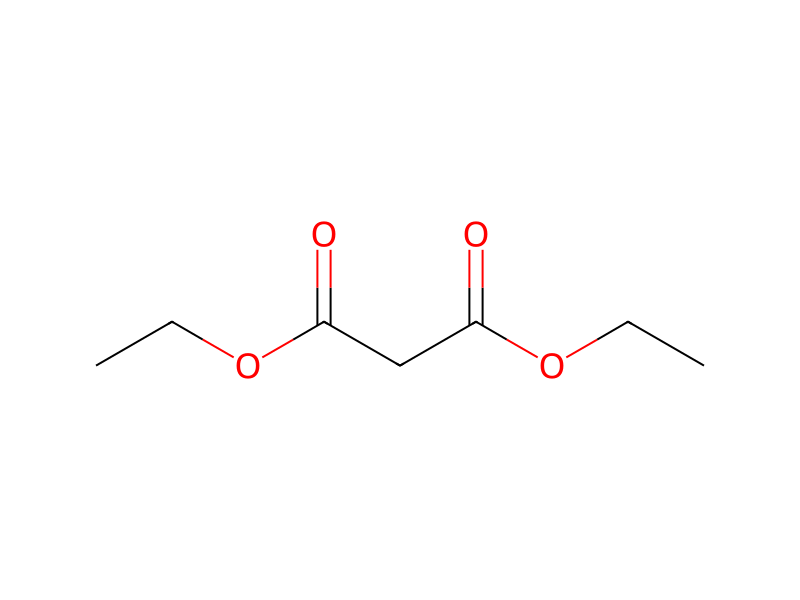
A mixture of 1 g of hexanal, 2.5 g of 2-(4-p-propylphenylbutyl)-propane-1,3-diol (obtainable by reacting diethyl malonate with 4-p-propylphenylbutyl bromide to give diethyl 2-(4-p-propylphenylbutyl)-malonate and reducing the latter with LiAlH4), 0.01 g of p-toluenesulfonic acid and 15 ml of toluene is boiled for 3 hours under a water separator and is cooled, washed with water and evaporated. This gives 2-pentyl-5-(4-p-propylphenylbutyl-1,3-dioxane.
Sources & evidence
- ORD record
- ord-841d2728973c4f819d51410af9fb1c82
- Source dataset
- uspto-grants-1989_05
- Patent number
- US04834905
Reaction notes
Loading…