Water → Stilbene
Reaction equation

O[C:2]1[CH:3]=[CH:4][CH:5]=[C:6]2[C:11]=1N=[CH:9][CH:8]=[CH:7]2.N1[CH2:17][CH2:16][CH2:15][CH2:14][CH2:13]1.O>C(O)C>[C:6]1([CH:7]=[CH:8][C:9]2[CH:17]=[CH:16][CH:15]=[CH:14][CH:13]=2)[CH:5]=[CH:4][CH:3]=[CH:2][CH:11]=1Participants
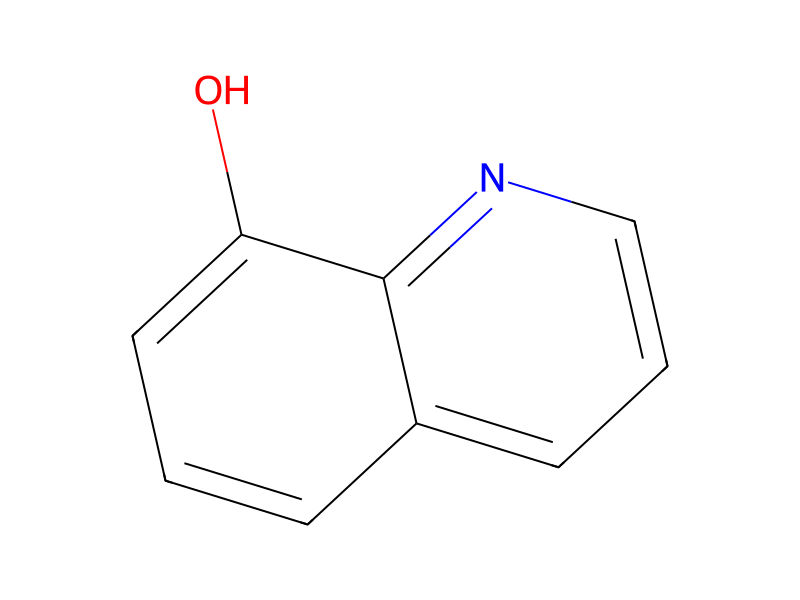
Reactant 3


Product 1

Reagents, catalysts & solvents 1

Procedure
Complex II-1 was synthesized through a reaction in the ethanol solution of 8-hydroxyquinoline, 2,2′-diol-stilbene (L3) and GaCl3. First, a solution of 8-hydroxyquinoline (0.05M) and piperidine (0.05M) in 100 ml ethanol was added to a solution of GaCl3 (0.5M) in 10 ml ethanol very slowly with an intensive stirring. Then, a solution of L3 (0.01M) and piperidine (0.02M) in 500 ml ethanol was introduced slowly. The mixture was stirred for about 1 hour and cooled to room temperature and kept in dark for about 1 hour. A scarlet precipitate was formed when equivalent amount water was poured into the solution. The product was collected by filtration and washed with ethanol rapidly, then dried under an infrared lamp. The obtained product powder showed strong red fluorescence under an ultraviolet lamp. The materials were further purified by an improved train sublimation method. The L3 ligand was obtained by typical synthesis method of stilbene. The molecular structure of Complex II-I was supported by mass spectrum (MS) and element analysis.
Workup
- customdark for about 1 hour
- additionwas poured into the solution
- filtrationThe product was collected by filtration
- washwashed with ethanol rapidly
- customdried under an infrared lamp
- customThe materials were further purified by an improved train sublimation method
Sources & evidence
- ORD record
- ord-f74015d51e014f619c2a7e41c1e8835b
- Source dataset
- uspto-grants-2007_06
- Patent number
- US07232616B2
Reaction notes
Loading…