Formaldehyde → Isobutylene
Reaction equation

[CH3:1]OC.[CH3:4][CH:5]([CH3:7])[CH3:6].[CH3:8][CH:9]=[CH:10][CH3:11].C=O>CO.C1C=CC=CC=1.C1(C)C=CC=CC=1.C1(C)C(C)=CC=CC=1>[CH2:4]=[C:5]([CH3:7])[CH3:6].[CH2:8]=[CH:9][CH:10]([CH3:1])[CH3:11]Participants

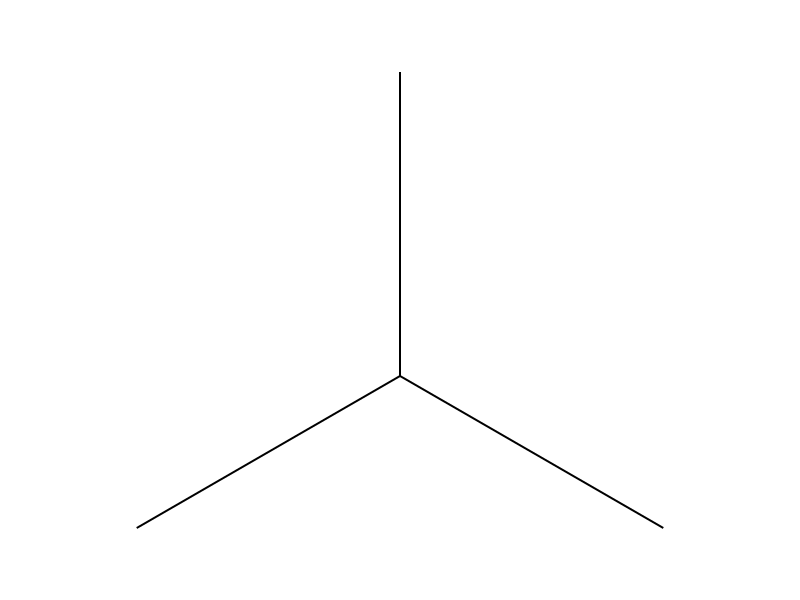


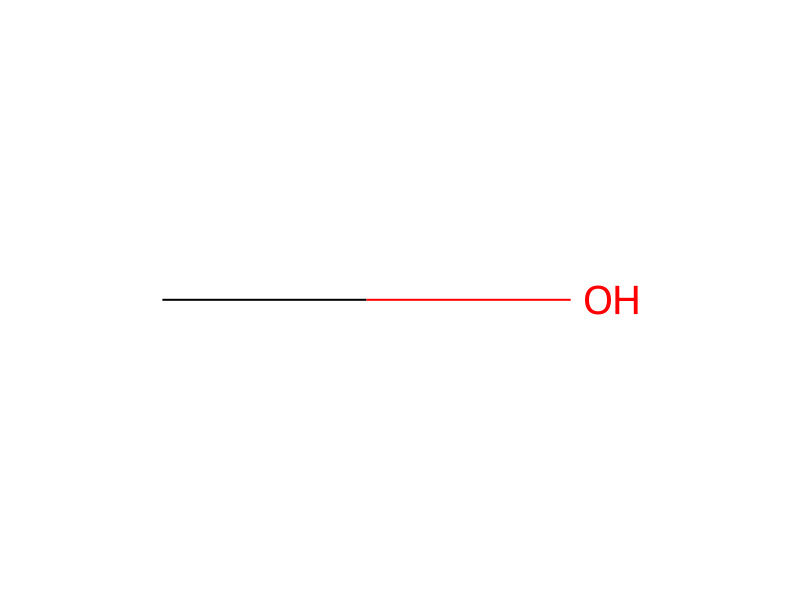
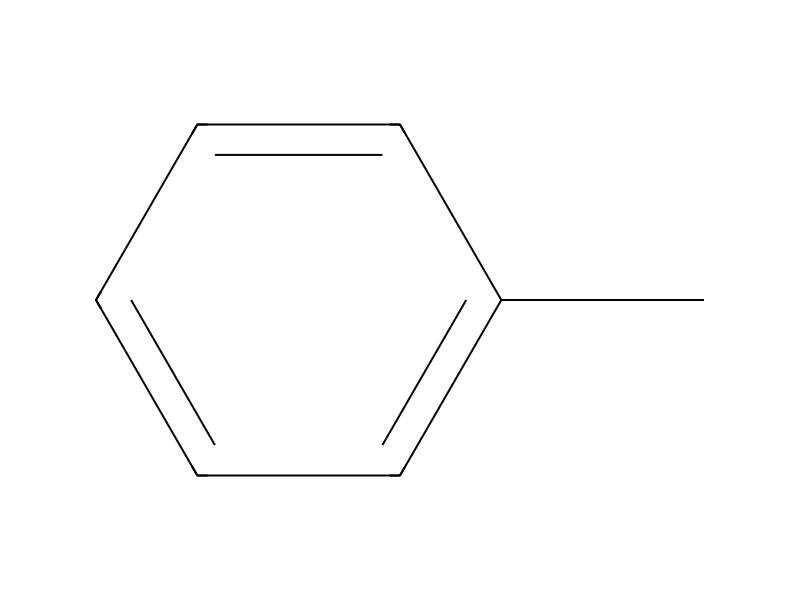
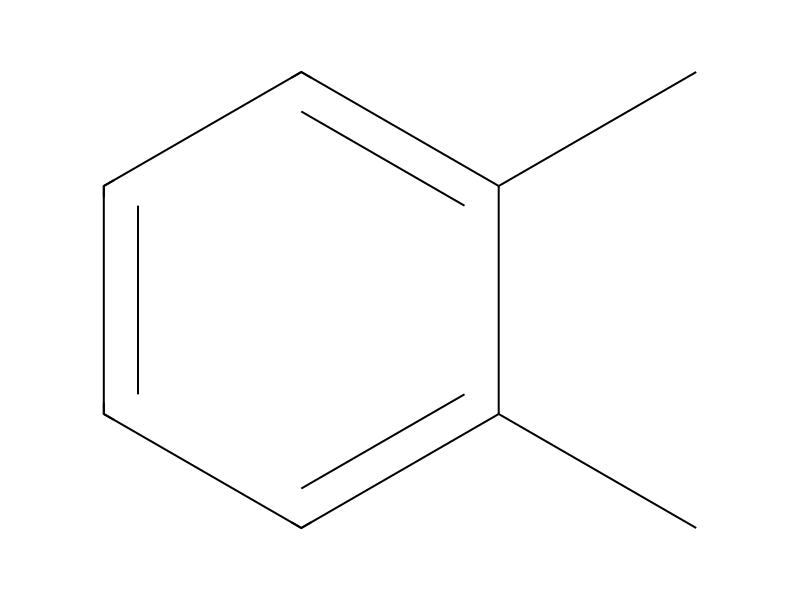
Procedure
The crystalline material of this invention can be used to catalyze a wide variety of chemical conversion processes including many of present commercial/industrial importance. Specific examples of chemical conversion processes which are effectively catalyzed by the crystalline material of this invention, by itself or in combination with one or more other catalytically active substances including other crystalline catalysts, include the following: cracking hydrocarbons with reaction conditions including a temperature of from about 300° C. to about 700° C., a pressure of from about 0.1 atmosphere (bar) to about 30 atmospheres and a weight hourly space velocity of from about 0.1 to about 20; dehydrogenating hydrocarbon compounds with reaction conditions including a temperature of from about 300° C. to about 700° C., a pressure of from about 0.1 atmosphere to about 10 atmospheres and a weight hourly space velocity of from about 0.1 to about 20: converting paraffins to aromatics with reaction conditions including a temperature of from about 100° C. to about 700° C., a pressure of from about 0.1 atmosphere to about 60 atmospheres, a weight hourly space velocity of from about 0.5 to about 400 and a hydrogen/hydrocarbon mole ratio of from about 0 to about 20; converting olefins to aromatics, e.g., benzene, toluene and xylenes, with reaction conditions including a temperature of from about 100° C. to about 700° C., a pressure of from about 0.1 atmosphere to about 60 atmospheres, a weight hourly space velocity of from about 0.5 to about 400 and a hydrogen/hydrocarbon mole ratio of from about 0 to about 20; converting alcohols, e.g., methanol, or ethers, e.g., dimethylether, or mixtures thereof to hydrocarbons including aromatics with reaction conditions including a temperature of from about 300° C. to about 550° C., more preferably from about 370° C. to about 500° C., a pressure of from about 0.01 psi to about 2000 psi, more preferably from about 0.1 psi to about 500 psi, and a liquid hourly space velocity of from about 0.5 to about 100; isomerizing xylene feedstock components with reaction conditions including a temperature of from about 230° C. to about 510° C., a pressure of from about 3 atmospheres to about 35 atmospheres, a weight hourly space velocity of from about 0.1 to about 200 and a hydrogen/hydrocarbon mole ratio of from about 0 to about 100; disproportionating toluene with reaction conditions including a temperature of from about 200° C. to about 760° C., a pressure of from about atmospheric to about 60 atmospheres and a weight hourly space velocity of from about 0.08 to about 20 ; alkylating isoalkanes, e.g., isobutane, with olefins, e.g., 2-butene, with reaction conditions including a temperature of from about -25° C. to about 400° C., e.g., from about 75° C. to about 200° C., a pressure of from below atmospheric to about 5000 psig, e.g., from about atmospheric to about 1000 psig, a weight hourly space velocity based on olefin of from about 0.01 to about 100, e.g., from about 0.1 to about 20, and a mole ratio of total isoalkane to total olefin of from about 1:2 to about 100:1, e.g., from about 3:1 to about 30:1; alkylating aromatic hydrocarbons, e.g., benzene and alkylbenzenes, in the presence of an alkylating agent, e.g., olefins, formaldehyde, alkyl halides and alcohols, with reaction conditions including a temperature of from about 340° C. to about 500° C., a pressure of from about atmospheric to about 200 atmospheres, a weight hourly space velocity of from about 2 to about 2000 and an aromatic hydrocarbon/alkylating agent mole ratio of from about 1/1 to about 20/1; transalkylating aromatic hydrocarbons in the presence of polyalkylaromatic hydrocarbons with reaction conditions including a temperature of from about 340° C. to about 500° C., a pressure of from about atmospheric to about 200 atmospheres, a weight hourly space velocity of from about 1 to about 1000 and an aromatic hydrocarbon/polyalkylaromatic hydrocarbon mole ratio of from about 1/1 to about 16/1; reacting olefins, e.g., isobutene or isopentene, with alcohols, e.g., methanol, to produce ethers with reaction conditions including a temperature of from about 20° C. to about 200° C., a total system pressure of from about 1 to about 200 atmospheres, an alcohol to olefin mole ratio of from about 0.1 to about 5 and a weight hourly space velocity of from 0.1 to about 200; converting light olefins, e.g., having 2 to 7 carbon atoms, to alcohol(s), ether(s) or mixtures thereof by reacting said light olefins with water under reaction conditions including a temperature from about 50° C. to about 300° C., a total pressure of at least about 5 atmospheres: and a mole ratio of water to total olefin of from about 0.1 to about 30; and transferring hydrogen from paraffins to olefins with reaction conditions including a temperature from about -25° C. to about 400° C., e.g., from about 75° C. to about 200° C., a pressure from below atmospheric to about 5000 psig, e.g., from about atmospheric to about 1000 psig, a mole ratio of total paraffin to total olefin of from about 1:2 to about 500:1, e.g., from about 5:1 to about 100:1; and a weight hourly space velocity based on olefin of from about 0.01 to about 100, e.g., from about 0.05 to about 5.
Workup
- customwith reaction conditions
- customof from about 300° C. to about 700° C.
- customof from about 300° C. to about 700° C.
- customwith reaction conditions
- customof from about 100° C. to about 700° C.
- customof from about 100° C. to about 700° C.
- customof from about 300° C. to about 550° C.
- custommore preferably from about 370° C. to about 500° C.
- customof from about 230° C. to about 510° C.
- customof from about 200° C. to about 760° C.
- customof from about -25° C. to about 400° C., e.g.
- customfrom about 75° C. to about 200° C.
- customof from about 340° C. to about 500° C.
- customof from about 340° C. to about 500° C.
Sources & evidence
- ORD record
- ord-eba1cea01501405ba5e5d24b786e4a42
- Source dataset
- uspto-grants-1995_01
- Patent number
- US05382742
Reaction notes
Loading…