Triethylamine → 4-(t-butyldimethylsilyloxy)styrene
Reaction equation

[CH:1]([C:3]1[CH:8]=[CH:7][C:6]([OH:9])=[CH:5][CH:4]=1)=[CH2:2].C(N(CC)CC)C.[C:17]([Si:21]([CH3:24])([CH3:23])Cl)([CH3:20])([CH3:19])[CH3:18]>C(Cl)Cl>[O:9]([C:6]1[CH:7]=[CH:8][C:3]([CH:1]=[CH2:2])=[CH:4][CH:5]=1)[Si:21]([C:17]([CH3:20])([CH3:19])[CH3:18])([CH3:24])[CH3:23]Participants
Reactant 3


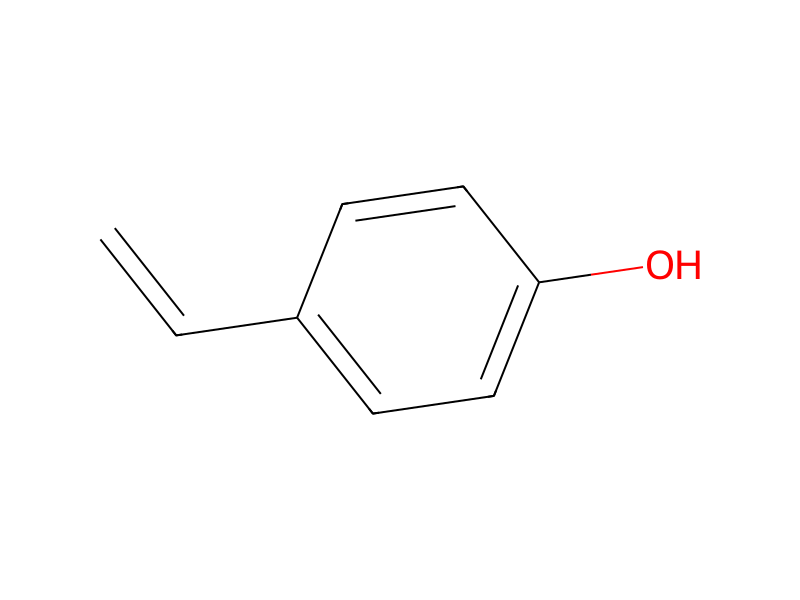
Product 1

Reagents, catalysts & solvents 1

Procedure
The concentrated 4-vinylphenol solution above and 10 mL (7.3 g, 0,072 mol) of triethylamine (TEA) were transferred to a 1 L 3 neck round-bottomed flask fitted with a mechanical stirrer, pressure-equalized addition funnel, reflux condenser, and argon inlet tube. A solution of 75 g (0.5 mol) Of t-butyldimethylchlorosilane and 75 mL (55 9, 0.54 mol) of dry TEA in 50 mL of methylene chloride was added through the addition funnel over 45 minutes. The reaction mixture turned pink and remained clear for quite some time. Considerable heat was evolved, particularly in the early stages of the addition, necessitating cooling the mixture in ice occasionally. The mixture was stirred at room temperature for 10 hrs., being stored in the freezer if necessary to complete the following day.
Workup
- customfitted with a mechanical stirrer, pressure-equalized addition funnel
- temperaturereflux condenser, and argon inlet tube
- temperatureConsiderable heat
- additionwas evolved, particularly in the early stages of the addition
- temperaturenecessitating cooling the mixture in ice occasionally
Sources & evidence
- ORD record
- ord-cf0c05f9d60d4c259a151b310ae8f0df
- Source dataset
- uspto-grants-1995_01
- Patent number
- US05384192
Reaction notes
Loading…