m-Chloroperbenzoic acid → 3-Bromo-2-methylpyridine N-oxide
Reaction equation

[Br:1][C:2]1[C:3]([CH3:8])=[N:4][CH:5]=[CH:6][CH:7]=1.ClC1C=CC=C(C(OO)=[O:17])C=1>C(Cl)Cl>[Br:1][C:2]1[C:3]([CH3:8])=[N+:4]([O-:17])[CH:5]=[CH:6][CH:7]=1Participants
4
Reactant 2

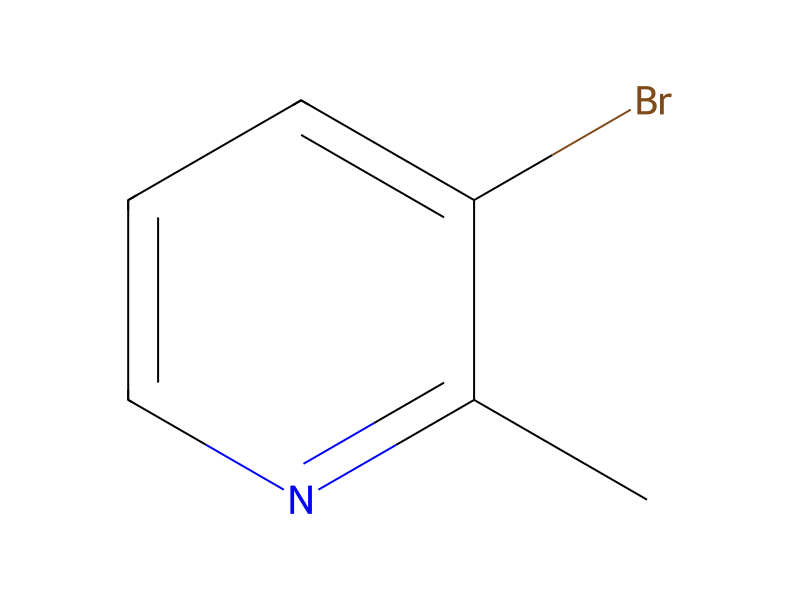
Product 1

Reagents, catalysts & solvents 1

Conditions
- Temperature
- 0 °C
Procedure
To a solution of 3-bromo-2-methylpyridine (5 g, 29.1 mmol) in DCM (50 ml) was added portionwise at 0° C. m-chloroperbenzoic acid (70%, 8.6 g, 34.9 mmol). The solution was stirred at 0° C. for three hours and then at room temperature overnight. The mixture was filtered, the residue was washed with DCM and the combined DCM phases were quenched with a 10% solution of sodium thiosulfate. The phases were separated, the organic phase was washed with a saturated solution of sodium bicarbonate and brine, dried (sodium sulfate) and concentrated under reduced pressure. The residue was purified by column chromatography (silica, diethyl ether, then DCM/methanol 95:5) to yield 4.44 g (23.6 mmol, yield 81%) MS (multi-mode) m/z=190.0 [M+1]+.
Workup
- customat room temperature
- customovernight
- filtrationThe mixture was filtered
- washthe residue was washed with DCM
- customthe combined DCM phases were quenched with a 10% solution of sodium thiosulfate
- customThe phases were separated
- washthe organic phase was washed with a saturated solution of sodium bicarbonate and brine
- dry with materialdried (sodium sulfate)
- concentrationconcentrated under reduced pressure
- customThe residue was purified by column chromatography (silica, diethyl ether
- customDCM/methanol 95:5) to yield 4.44 g (23.6 mmol, yield 81%)
Sources & evidence
- ORD record
- ord-9b821ed472494f36a9b360b4039bd2ee
- Source dataset
- uspto-grants-2016_02
- Patent number
- US09260441B2
Reaction notes
Loading…