Imidazole → 3-((Tert-butyldiphenylsilyl)oxy)azetidine
Reaction equation

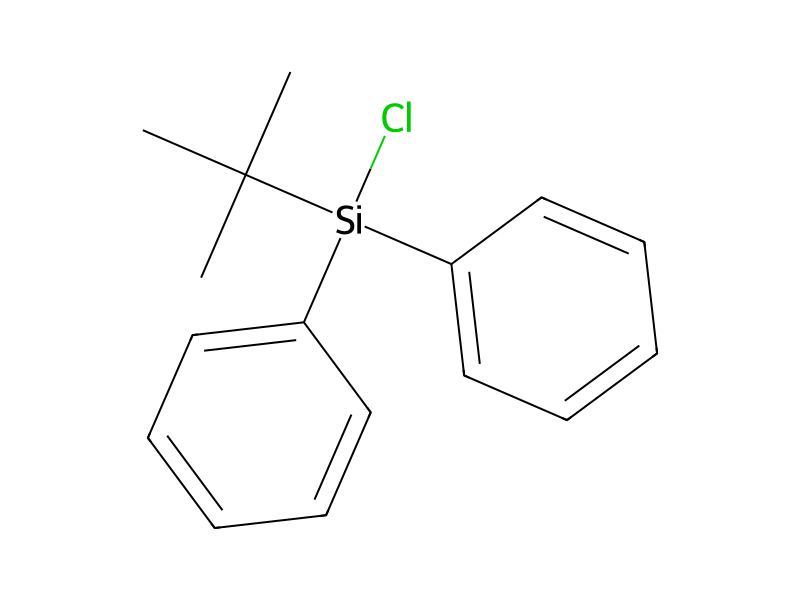
Cl.[NH:2]1[CH2:5][CH:4]([OH:6])[CH2:3]1.N1C=CN=C1.[CH3:12][C:13]([Si:16](Cl)([C:23]1[CH:28]=[CH:27][CH:26]=[CH:25][CH:24]=1)[C:17]1[CH:22]=[CH:21][CH:20]=[CH:19][CH:18]=1)([CH3:15])[CH3:14]>C(Cl)Cl.O>[Si:16]([O:6][CH:4]1[CH2:5][NH:2][CH2:3]1)([C:13]([CH3:15])([CH3:14])[CH3:12])([C:23]1[CH:24]=[CH:25][CH:26]=[CH:27][CH:28]=1)[C:17]1[CH:22]=[CH:21][CH:20]=[CH:19][CH:18]=1Participants
6





Procedure
To a solution of azetidin-3-ol hydrochloride (5.11 g, 46.7 mmol, 1.0 equiv) and 1H-imidazole (9.52 g, 140 mmol, 3.0 equiv) in DCM (100 mL) at 0° C. was added TBDPSCl (19.18 g, 70 mmol, 1.5 equiv) dropwise. The resulting mixture was stirred at rt overnight and then diluted with water, and extracted with DCM. The combined organic layer was dried over anhydrous sodium sulfate, filtered and concentrated under vacuum. The crude product was eluted over a silica gel with DCM/MeOH=1001 to 101 to give 12 g of 3-(tert-butyldiphenylsilyloxy)azetidine as a colorless oil.
Workup
- extractionextracted with DCM
- dry with materialThe combined organic layer was dried over anhydrous sodium sulfate
- filtrationfiltered
- concentrationconcentrated under vacuum
- washThe crude product was eluted over a silica gel with DCM/MeOH=1001 to 101
Sources & evidence
- ORD record
- ord-0652ca58e7f94ef0a03f0f98ec0ba0d0
- Source dataset
- uspto-grants-2016_02
- Patent number
- US09266895B2
Reaction notes
Loading…