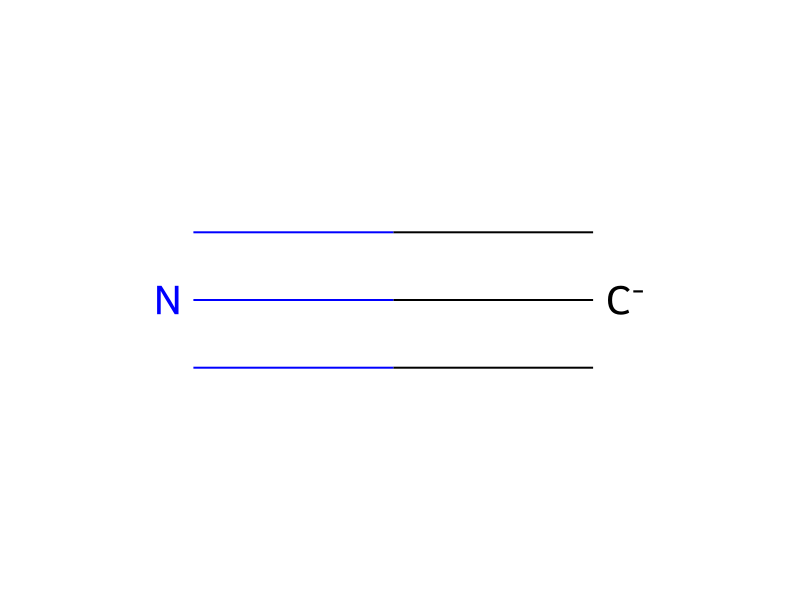
Cyanide → HCID 57590379, compound
Reaction equation

C([Li])C1C=CC=CC=1.[CH2:9]([C:16]1[C:25](Cl)=[N:24][C:23]2[C:18](=[CH:19][CH:20]=[CH:21][CH:22]=2)[N:17]=1)[C:10]1[CH:15]=[CH:14][CH:13]=[CH:12][CH:11]=1.[C-:27]#[N:28]>>[CH2:9]([C:16]1[C:25]([C:27]#[N:28])=[N:24][C:23]2[C:18](=[CH:19][CH:20]=[CH:21][CH:22]=2)[N:17]=1)[C:10]1[CH:15]=[CH:14][CH:13]=[CH:12][CH:11]=1Participants
4


Procedure
Intermediate 3 can be prepared from the starting material 2,3-dichloroquinoxaline 1 following the reaction in Scheme 1. In this manner, quinoxaline 1 can be reacted with benzylmagnesium chloride in THF to afford 2-benzyl-3-chloroquinoxaline 2. 2-Benzylquinoxalines can also be prepared by reaction with alternative alkylating reagents, such as, but not limited to, benzyllithium. 2-Benzyl-3-chloroquinoxaline 2 can be reacted with cyanide to obtain intermediate 2-benzyl-3-cyanoquinoxaline 3.
Sources & evidence
- ORD record
- ord-c6ffcff6f31e4e339a3265be4b192216
- Source dataset
- uspto-grants-2009_03
- Patent number
- US07501416B2
Reaction notes
Loading…