Water → 1-(3-Bromo-2-methyl-1-propenyl)-4-isopropylbenzene
Reaction equation

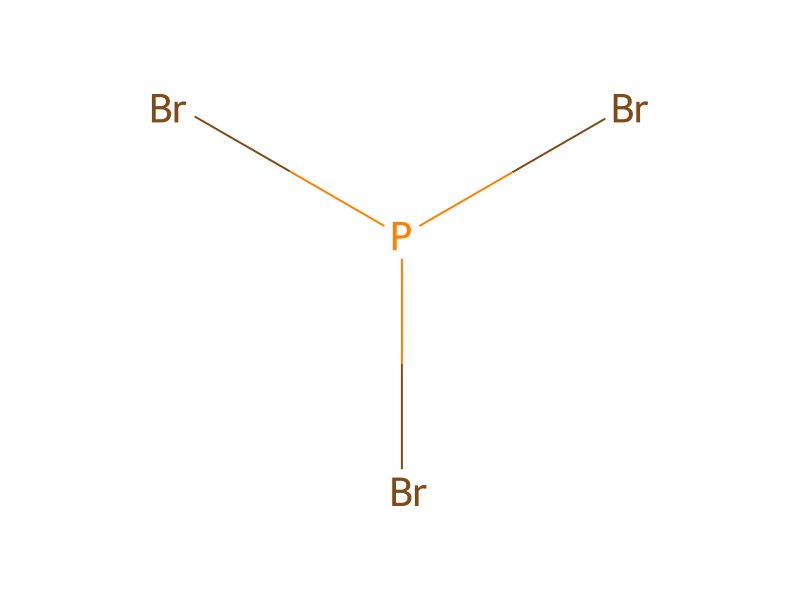
[CH:1]([C:4]1[CH:9]=[CH:8][C:7]([CH:10]=[C:11]([CH3:14])[CH2:12]O)=[CH:6][CH:5]=1)([CH3:3])[CH3:2].P(Br)(Br)[Br:16].O>C(OC(C)C)(C)C>[Br:16][CH2:12][C:11]([CH3:14])=[CH:10][C:7]1[CH:8]=[CH:9][C:4]([CH:1]([CH3:3])[CH3:2])=[CH:5][CH:6]=1Participants
5
Reactant 3


Product 1

Reagents, catalysts & solvents 1

Procedure
To a solution of 3-(4-isopropylphenyl)-2-methyl-2-propen-1-ol synthesized in Reference Example 103 (6.30 g, 33.1 mmol) in isopropyl ether (50 mL) was added phosphorus tribromide (5.98 g, 22.1 mmol) with ice-cooling and the mixture was stirred at room temperature for 30 minutes. Water was added to the reaction solution and the mixture was extracted with isopropyl ether. The organic layer was washed with water and a saturated sodium hydrogen carbonate solution, dried over magnesium sulfate, filtered, and then concentrated under reduced pressure to obtain the oily title compound 7.63 g (yield 91%)
Workup
- temperaturecooling
- extractionthe mixture was extracted with isopropyl ether
- washThe organic layer was washed with water
- dry with materiala saturated sodium hydrogen carbonate solution, dried over magnesium sulfate
- filtrationfiltered
- concentrationconcentrated under reduced pressure
Sources & evidence
- ORD record
- ord-6e20631283514e81b42c54b67862b580
- Source dataset
- uspto-grants-2009_03
- Patent number
- US07507841B2
Reaction notes
Loading…