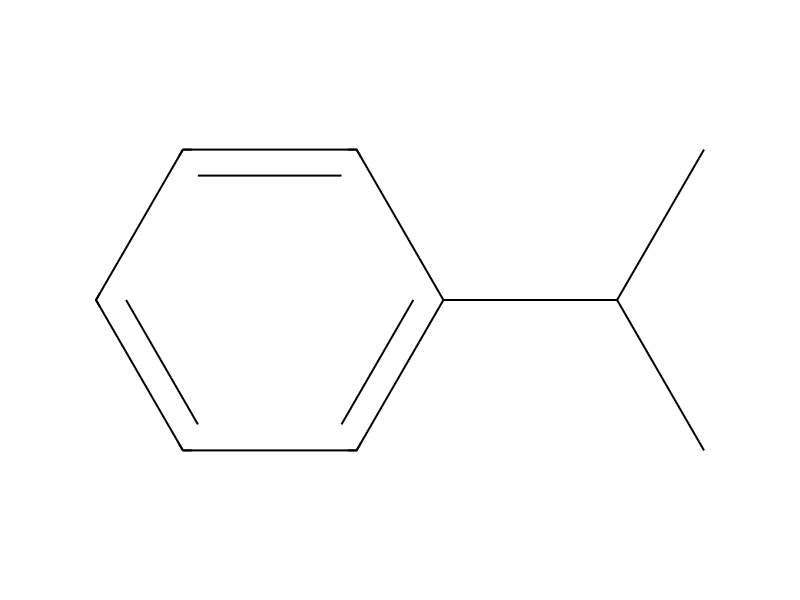
Cumene → 2-Bromo-1-(4-(propan-2-yl)phenyl)ethan-1-one
Reaction equation

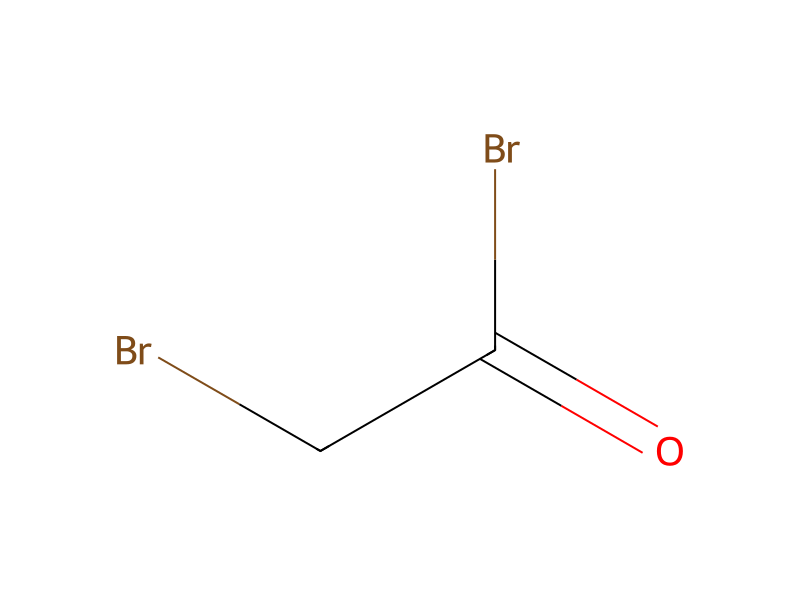
[C:1]1([CH:7]([CH3:9])[CH3:8])[CH:6]=[CH:5][CH:4]=[CH:3][CH:2]=1.[Cl-].[Al+3].[Cl-].[Cl-].[Br:14][CH2:15][C:16](Br)=[O:17]>ClCCl>[Br:14][CH2:15][C:16]([C:4]1[CH:5]=[CH:6][C:1]([CH:7]([CH3:9])[CH3:8])=[CH:2][CH:3]=1)=[O:17]Participants
Reactant 3

Product 1

Reagents, catalysts & solvents 1

Procedure
To a solution of cumene (27.8 mL, 200 mmol) and aluminum chloride (32.0 g, 240 mmol) in dichloromethane (300 mL) was added bromoacetylbromide (19.1 mL, 220 mmol) at −10° C., and the mixture was stirred at the same temperature for 2 hours. The reaction solution was poured into ice-cold water, and an organic layer was separated. The organic layer was washed with a saturated sodium hydrogen carbonate solution and a saturated brine, and then was dried over sodium sulfate. The solvent was distilled off under reduced pressure, and the residue was purified by silica gel column chromatography (ethyl acetate:hexane=1:9) to obtain 2-bromo-1-(4-isopropylphenyl)ethanone of oily matter. The obtained oily matter was added to a solution of 3,5-dimethylphenol (29.3 g, 240 mmol) and potassium carbonate (33.2 g, 240 mmol) in acetone (500 mL), and the mixture then was stirred under heat and reflux for 12 hours. The reaction solution was ice-cooled and poured into cold water, which was extracted with diethyl ether.
Workup
- additionThe reaction solution was poured into ice-cold water
- customan organic layer was separated
- washThe organic layer was washed with a saturated sodium hydrogen carbonate solution
- dry with materiala saturated brine, and then was dried over sodium sulfate
- distillationThe solvent was distilled off under reduced pressure
- customthe residue was purified by silica gel column chromatography (ethyl acetate:hexane=1:9)
Sources & evidence
- ORD record
- ord-bdfdb7fc84a14927a0d813fd6345543c
- Source dataset
- uspto-grants-2009_03
- Patent number
- US07507841B2
Reaction notes
Loading…