Hydrochloric Acid → HCID 57434740, compound
Reaction equation

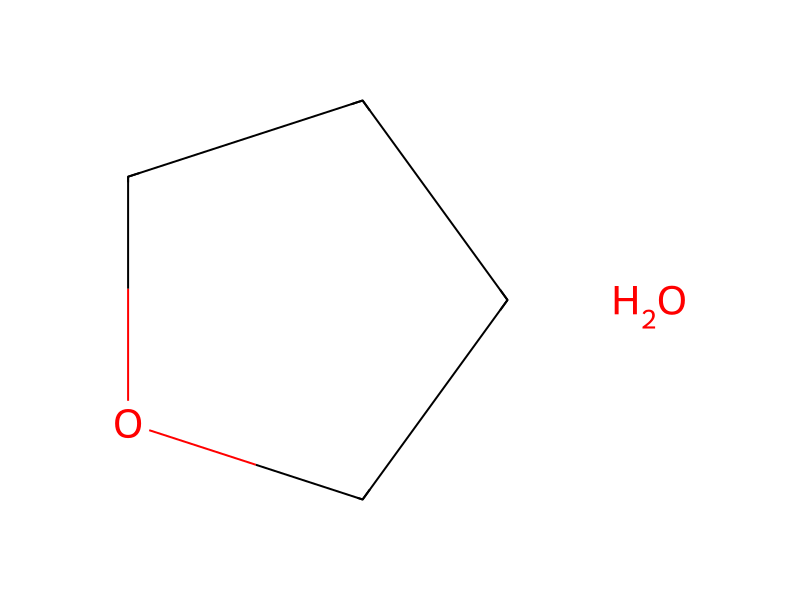
[N+:1]([C:4]1[CH:5]=[C:6]([S:10]([N:13]2[CH2:17][CH:16]=[CH:15][CH2:14]2)(=[O:12])=[O:11])[CH:7]=[CH:8][CH:9]=1)([O-])=O.[In].Cl>O.O1CCCC1>[N:13]1([S:10]([C:6]2[CH:5]=[C:4]([CH:9]=[CH:8][CH:7]=2)[NH2:1])(=[O:12])=[O:11])[CH2:14][CH:15]=[CH:16][CH2:17]1Participants
Reactant 3



Product 1

Reagents, catalysts & solvents 1
Procedure
A 250 mL round bottom flask was equipped with a magnetic stirrer and charged with 1-(3-nitrobenzenesulfonyl)-2,5-dihydro-1H-pyrrole (Example 92, 9.32 mmol, followed by 3:1 water/tetrahydrofuran v/v (50 mL). Indium powder (37.3 mmol) was added, followed by concentrated HCl (55.9 mmol). The reaction gives a slight exotherm and the indium forms a solid metal chunk. After 24 hours, TLC (dichloromethane/silica) indicated the reaction was mostly complete. The indium was removed with a pair of tweesers to a separate waste stream and the reaction was neutralized with sodium bicarbonate. The aqueous mixture was extracted with ethyl acetate (150 mL), the organic layer dried (Na2SO4), filtered, and the solvent was removed under reduced pressure. The residue was dissolved in dichloromethane (20 mL) and loaded onto a 600 mL sintered glass funnel charged with silica gel (400 g). The silica plug was eluted with 9:1 dichloromethane:ethyl acetate, collecting 100 mL fractions. Fractions containing the desired product were combined and the solvent was removed under diminished pressure to afford 3-(2,5-dihydropyrrole-1-sulfonyl)-aniline as a white, crystalline solid. 1.50 g, (72%). m.p.: 187-188° C. LC/MS: m/z 224.8 [C10H12N2O2S+H]+. 1H-NMR (CDCl3): δ 4.0 (b, 2H); 4.13 (s, 4H); 5.66 (s, 2H); 6.84-6.87 (d, 1H, J=7.9 Hz); 7.13-7.14 (s, 1H); 7.18-7.20 (d, 1H, J=7.7 Hz); 7.26-7.31 (t, 1H, J=7.8 Hz).
Workup
- customA 250 mL round bottom flask was equipped with a magnetic stirrer
- customThe reaction gives a slight exotherm
- customThe indium was removed with a pair of tweesers to a separate waste stream
- extractionThe aqueous mixture was extracted with ethyl acetate (150 mL)
- dry with materialthe organic layer dried (Na2SO4)
- filtrationfiltered
- customthe solvent was removed under reduced pressure
- dissolutionThe residue was dissolved in dichloromethane (20 mL)
- customloaded onto a 600 mL sintered glass funnel
- additioncharged with silica gel (400 g)
- washThe silica plug was eluted with 9:1 dichloromethane
- customethyl acetate, collecting 100 mL fractions
- additionFractions containing the desired product
- customthe solvent was removed under diminished pressure
Sources & evidence
- ORD record
- ord-5362103fe729464b9b00306f015dd742
- Source dataset
- uspto-grants-2009_03
- Patent number
- US07511133B2
Reaction notes
Loading…