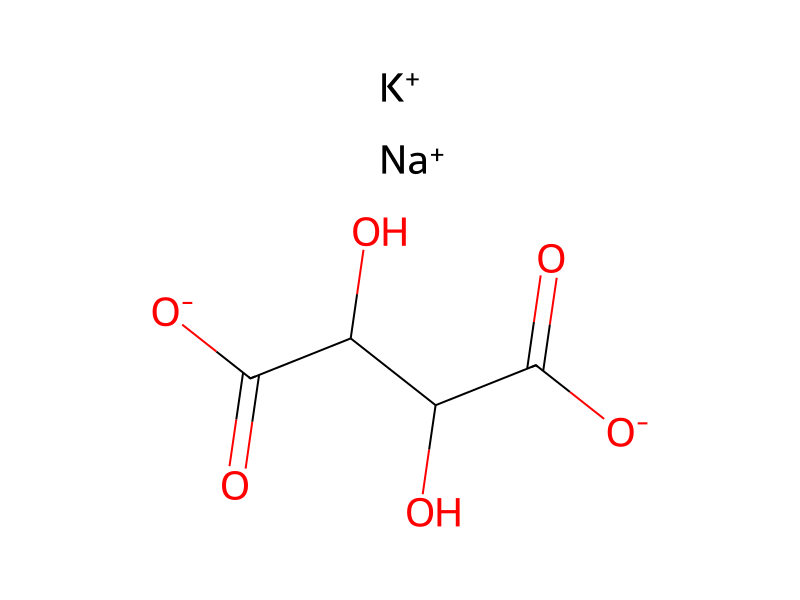
Potassium sodium tartarate → HCID 68828217, compound
Reaction equation

C[O:2][C:3](=O)[CH:4]=[CH:5][C:6]1([CH3:12])[CH2:11][CH2:10][O:9][CH2:8][CH2:7]1.[H-].C([Al+]CC(C)C)C(C)C.C(C(C(C([O-])=O)O)O)([O-])=O.[K+].[Na+]>C1COCC1.C1(C)C=CC=CC=1>[CH3:12][C:6]1([CH:5]=[CH:4][CH2:3][OH:2])[CH2:7][CH2:8][O:9][CH2:10][CH2:11]1Participants





Conditions
- Temperature
- -78 °C
Procedure
Into a cooled (−78° C.) solution of 640 mg (3.47 mmol) of 3-(4-methyltetrahydropyran-4-yl)acrylic acid methyl ester obtained in the above 3) in THF was dropped 8.0 mL (8.00 mmol) of 1.0 mol/L diisobutylaluminum hydride in toluene at under an atmosphere of argon, and stirred for 3 hours at −78° C. The reaction mixture was allowed to warm to room temperature, and then an aqueous solution of sodium potassium tartrate was added, followed by a removal of solvent under a reduced pressure. Water was added to the residue and the mixture was extracted with ethyl acetate. The organic layer was washed with saturated brine and dried over anhydrous magnesium sulfate, and the solvent was removed to obtain 543 mg (yield 71%) of crude 3-(4-methyltetrahydropyran-4-yl)prop-2-ene-1-ol. Its physical property is shown below.
Workup
- temperatureto warm to room temperature
- customfollowed by a removal of solvent under a reduced pressure
- additionWater was added to the residue
- extractionthe mixture was extracted with ethyl acetate
- washThe organic layer was washed with saturated brine
- dry with materialdried over anhydrous magnesium sulfate
- customthe solvent was removed
Sources & evidence
- ORD record
- ord-cd7f8e13f7d0487588bb7cf4fccb3afd
- Source dataset
- uspto-grants-2009_03
- Patent number
- US07511144B2
Reaction notes
Loading…