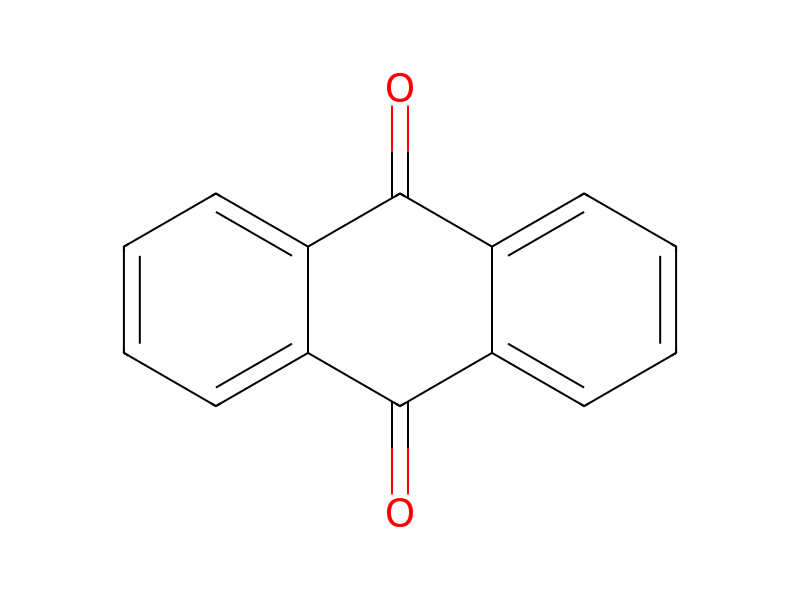
Anthraquinone → 4,8-Diamino-2-bromo-1,5-dihydroxy-6-phenoxyanthracene-9,10-dione
Reaction equation

[NH2:1][C:2]1[C:15]2[C:14](=[O:16])[C:13]3[C:8](=[C:9]([NH2:19])[CH:10]=[C:11]([Br:18])[C:12]=3[OH:17])[C:7](=[O:20])[C:6]=2[C:5]([OH:21])=[C:4](Br)[CH:3]=1.C1[C:36]2[C:35](=[O:37])[C:34]3[C:29](=CC=CC=3)[C:28](=O)[C:27]=2C=CC=1>>[NH2:1][C:2]1[C:15]2[C:14](=[O:16])[C:13]3[C:8](=[C:9]([NH2:19])[CH:10]=[C:11]([Br:18])[C:12]=3[OH:17])[C:7](=[O:20])[C:6]=2[C:5]([OH:21])=[C:4]([O:37][C:35]2[CH:36]=[CH:27][CH:28]=[CH:29][CH:34]=2)[CH:3]=1Participants
3


Procedure
When 11.7 g of 1,5-diamino-4,8-dihydroxy-3,7-dibromoanthraquinone, compared Example 349a, are used as the anthraquinone component in Example 415a, then 3.9 g, corresponding to 32% of theory, of 1,5-diamino-4,8-dihydroxy-3-phenoxy-7-bromoanthraquinone are obtained quite analogously, the colour shade of which, adsorbed on silica gel, is a blue of Indicator Number 14 (Colour Index Hue Indication Chart).
Sources & evidence
- ORD record
- ord-30c616f407b74e7c8cef1dc122b53a6e
- Source dataset
- uspto-grants-1987_08
- Patent number
- US04689171
Reaction notes
Loading…