Acetophenone → Phenylpyruvic acid
Reaction equation

[OH-:1].[Ca+2].[OH-:3].[CH2:4](Cl)[C:5]1[CH:10]=[CH:9][CH:8]=[CH:7][CH:6]=1.[C:12]([C:15]1[CH:20]=[CH:19][CH:18]=[CH:17][CH:16]=1)(=[O:14])[CH3:13]>[CH-]=O.[CH-]=O.[C-]#[O+].[C-]#[O+].[C-]#[O+].[C-]#[O+].[C-]#[O+].[C-]#[O+].[Co].[Co+2].O>[C:5]1([CH2:4][C:15](=[O:3])[C:12]([OH:14])=[O:1])[CH:10]=[CH:9][CH:8]=[CH:7][CH:6]=1.[C:15]1([CH2:12][C:13]([OH:3])=[O:1])[CH:20]=[CH:19][CH:18]=[CH:17][CH:16]=1Participants
7


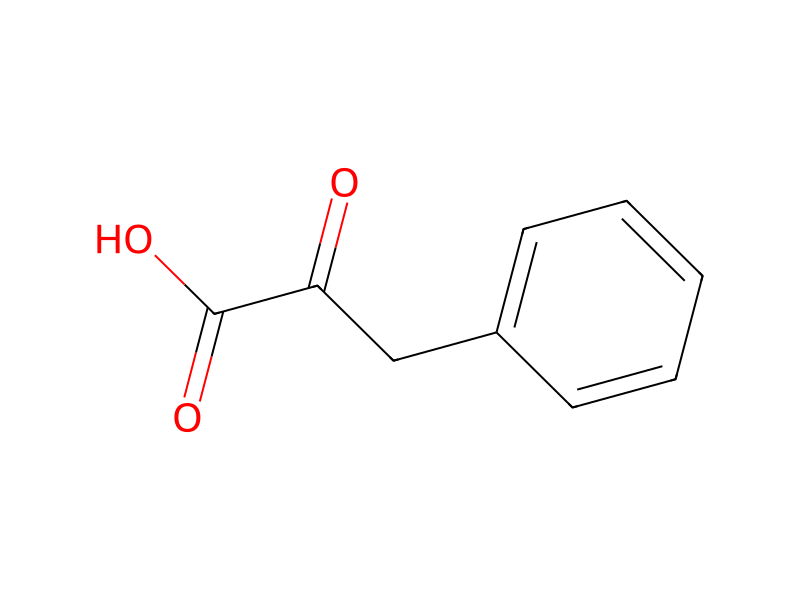



Procedure
Into a stainless steel-made autoclave of 135 ml capacity were introduced 25 ml of water, 4.7 g of calcium hydroxide, 3.8 g of benzyl chloride and 50 ml of the organic solution of acetophenone containing the cobalt carbonyl catalyst and recovered in Example 6 to form a reaction mixture. The reaction and subsequent processing of the reaction mixture were performed in substantially the same manner as in Example 6. The yields of phenyl pyruvic acid and phenyl acetic acid were 71.5% and 22.0%, respectively, of the respective theoretical values based on the amount of benzyl chloride.
Workup
- customrecovered in Example 6
- customto form a reaction mixture
- customThe reaction and subsequent processing of the reaction mixture
Sources & evidence
- ORD record
- ord-153ada47a0d1474199f382bca6a97f00
- Source dataset
- uspto-grants-1987_08
- Patent number
- US04689431
Reaction notes
Loading…