Butanedione → HCID 22037030, compound
Reaction equation

[CH3:1][C:2](=O)[C:3](=O)[CH3:4].S(S([O-])=O)([O-])(=O)=O.[Na+].[Na+].[NH2:16][C:17]1[C:27]([NH2:28])=[CH:26][CH:25]=[CH:24][C:18]=1[C:19]([O:21][CH2:22][CH3:23])=[O:20].C([O-])([O-])=O.[K+].[K+]>O>[CH3:1][C:2]1[C:3]([CH3:4])=[N:16][C:17]2[C:18]([C:19]([O:21][CH2:22][CH3:23])=[O:20])=[CH:24][CH:25]=[CH:26][C:27]=2[N:28]=1Participants
6
Reactant 4


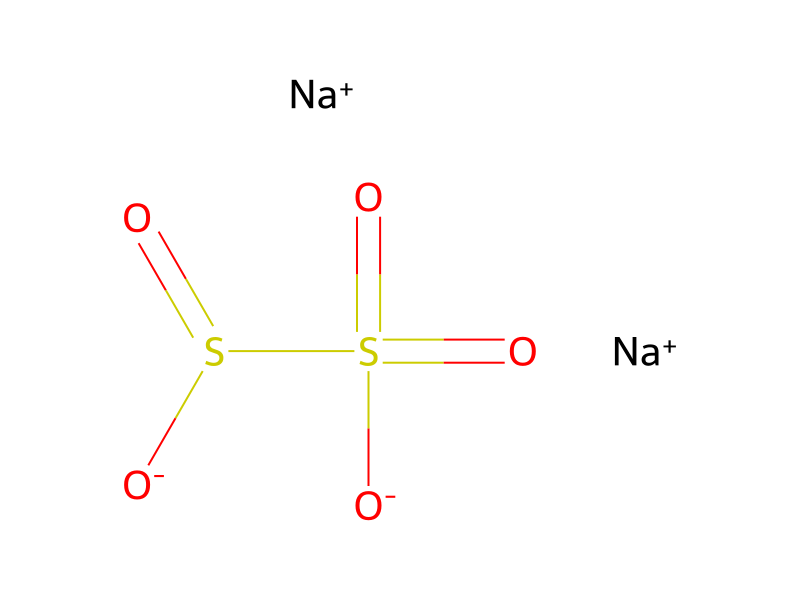

Product 1

Reagents, catalysts & solvents 1

Conditions
- Temperature
- 70 °C
Procedure
2,3-Butanedione (0.0776 mol) was added at room temperature to a solution of sodium pyrosulfite (0.1 mol) in water (75 ml). The mixture was heated to 70° C. and then added to a solution of ethyl 2,3-diaminobenzoate (0.0776 mol) in water (75 ml). The mixture was stirred at 100° C. for 12 hours, cooled, basified with K2CO3 10% and =extracted with EtOAc. The organic layer was separated, dried (MgSO4), filtered and the solvent was evaporated. The residue (17.5 g) was purified by column chromatography over silica gel (eluent: CH2Cl2/EtOAc 93/7; 20–45 μm). The pure fractions were collected and the solvent was evaporated, yielding 12 g (67%) of ethyl 2,3-dimethyl-5-quinoxalinecarboxylate (interm. 6).
Workup
- temperaturecooled
- extractionextracted with EtOAc
- customThe organic layer was separated
- dry with materialdried (MgSO4)
- filtrationfiltered
- customthe solvent was evaporated
- customThe residue (17.5 g) was purified by column chromatography over silica gel (eluent: CH2Cl2/EtOAc 93/7; 20–45 μm)
- customThe pure fractions were collected
- customthe solvent was evaporated
Sources & evidence
- ORD record
- ord-a0f99a5dfa9a45848a8856bf58a18c6e
- Source dataset
- uspto-grants-2006_07
- Patent number
- US07071192B1
Reaction notes
Loading…