4-Bromo-N'-hydroxybenzene-1-carboximidamide → 2,5-bis(4-cyanophenyl)furan
Reaction equation

Br[C:2]1[CH:11]=[CH:10][C:5]([C:6](=NO)[NH2:7])=[CH:4][CH:3]=1.[C:12]([C:14]1[CH:19]=[CH:18][C:17]([C:20]2[O:21][CH:22]=[CH:23][CH:24]=2)=[CH:16][CH:15]=1)#[N:13]>C(#N)C1C=CC=CC=1>[C:12]([C:14]1[CH:15]=[CH:16][C:17]([C:20]2[O:21][C:22]([C:2]3[CH:11]=[CH:10][C:5]([C:6]#[N:7])=[CH:4][CH:3]=3)=[CH:23][CH:24]=2)=[CH:18][CH:19]=1)#[N:13]Participants
4
Reactant 2


Product 1

Reagents, catalysts & solvents 1
Procedure
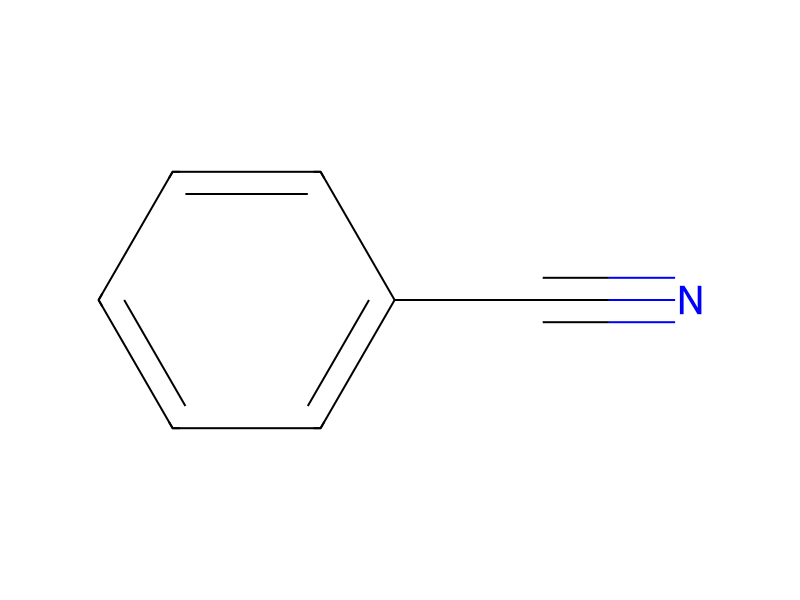
in good yield. In contrast, under N-coupling conditions the benzamidoxime was converted to benzonitrile (Anbazhagan et al., (2002) Tetrahedron Lett. 43: 4221) and attempted Heck coupling of 4-bromobenzamidoxime with 2(4-cyanophenyl)furan yielded 2,5-bis(4-cyanophenyl)furan.
Sources & evidence
- ORD record
- ord-23c53c47db3d41769913a28db1a35118
- Source dataset
- uspto-grants-2006_07
- Patent number
- US07071338B2
Reaction notes
Loading…