1-Bromo-2,4-dichlorobenzene → 1-(2,4-Dichlorophenyl)-4-hydroxy-2-methylbutan-1-one
Reaction equation

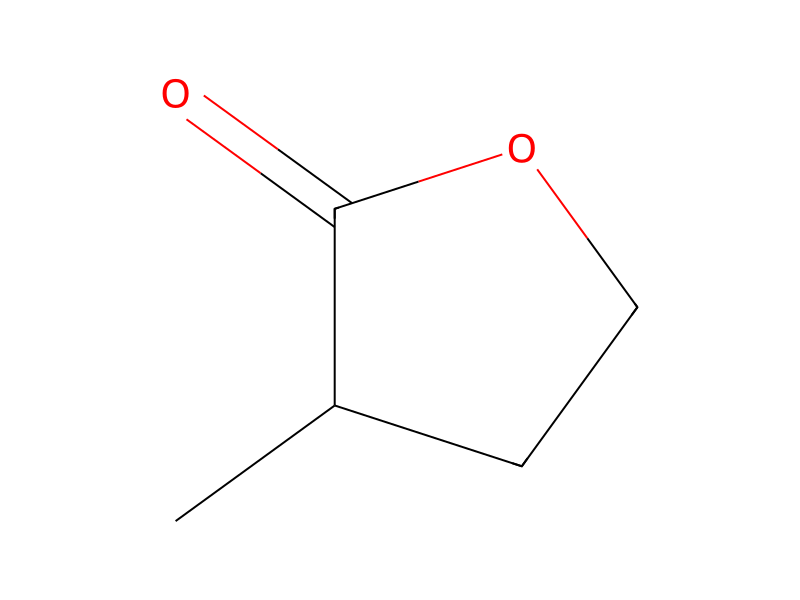
[Cl:1][C:2]1[CH:7]=[C:6]([Cl:8])[CH:5]=[CH:4][C:3]=1Br.[Li]C(C)(C)C.[CH3:15][CH:16]1[CH2:21][CH2:20][O:19][C:17]1=[O:18]>C1COCC1>[Cl:1][C:2]1[CH:7]=[C:6]([Cl:8])[CH:5]=[CH:4][C:3]=1[C:17](=[O:18])[CH:16]([CH3:15])[CH2:21][CH2:20][OH:19]Participants




Conditions
- Temperature
- -95 °C
Procedure
To a 2 L, 3-neck round bottom flask, equipped with a mechanic stirrer and an internal temperature controller, is added a solution of 2,4-dichlorobromobenzene (65.5 g, 290.7 mmol) in 1.1 L of THF under nitrogen. The solution is cooled to −95° C. with a MeOH/liquid nitrogen bath. To this solution is added t-BuLi (400 mL, 1.6 M in pentane, 639.5 mmol) slowly via syringe pump followed by the addition of a solution of α-methyl-γ-butyrolactone (43.5 g, 434.8 mmol) in THF (100 mL). The internal temperature is controlled <−80° C. After 1 h stirring <−80° C., the reaction mixture is quenched with saturated NH4Cl solution and warmed to room temperature. Water (2 L) and EtOAc (1 L) are added and separated. The aqueous layer is extracted with EtOAc (2×2 L). The combined organic solutions is dried (MgSO4) and filtered. The filtrate is concentrated in vacuo to dryness to give 80.9 g of 1-(2,4-dichlorophenyl)-4-hydroxy-2-methylbutan-1-one as light yellow oil. The residue is used for Swern oxidation. To a 2 L, 3-neck round bottom flask, equipped with a mechanic stirrer and an internal temperature controller, is added DMSO (104.1 mL, 1465.7 mmol) and CH2Cl2 (1.1 L). The solution is cooled to −80° C. with a MeOH/liquid nitrogen bath. To this solution is added oxalyl chloride (63.9 mL, 732.9 mmol) slowly via syringe pump. The mixture is stirred at −80° C. for 15 min followed by the addition of a solution of the above obtained crude 1-(2,4-dichlorophenyl)-4-hydroxy-2-methylbutan-1-one in CH2Cl2 (150 mL) slowly via syringe pump. After stirring <−70° C. for 1 h, to the mixture is added Et3N (456 mL, 3271.7 mmol). The cooling bath is removed after 5 min and the mixture is stirred at room temperature for 1.5 h. The mixture is diluted with hexanes (6 L) and washed with water (6 L). The aqueous layer is extracted with hexanes (6 L). The combined organic solutions is concentrated in vacuo to dryness and the residue is subjected to column chromatography (silica gel, 1/6 EtOAc/heptane) to give 36 g (50% for two steps) of light yellow oil as the title compound: 1H NMR (400 MHz, CDCl3) δ 9.86 (s, 1H), 7.61 (d, J=8.3 Hz, 1H), 7.49 (d, J=2.0 Hz, 1H), 7.37 (dd, J=2.0, 8.3 Hz, 1H), 3.81–3.76 (m, 1H), 3.18 (dd, J=8.2, 18.6 Hz, 1H), 2.65 (dd, J=5.0, 18.6 Hz, 1H), 1.21 (d, J=7.3 Hz, 3H); 13C NMR (100 MHz, CDCl3) δ 206.1, 202.4, 139.5, 139.2, 134.4, 132.7, 132.4, 129.6, 48.8, 42.0, 18.6; IR (liq.) 2974, 2936, 1996, 1910, 1708, 1585, 1457, 1374, 1228, 1191, 1106, 1064, 978, 828, 810 cm−1; MS (CI) m/z 247 (M+), 245 (M+).
Workup
- customTo a 2 L, 3-neck round bottom flask, equipped with a mechanic stirrer
- customis controlled <−80° C
- customthe reaction mixture is quenched with saturated NH4Cl solution
- temperaturewarmed to room temperature
- additionWater (2 L) and EtOAc (1 L) are added
- customseparated
- extractionThe aqueous layer is extracted with EtOAc (2×2 L)
- dry with materialThe combined organic solutions is dried (MgSO4)
- filtrationfiltered
- concentrationThe filtrate is concentrated in vacuo to dryness
Sources & evidence
- ORD record
- ord-4b10d66a37984dbc96ffa4e97a84c346
- Source dataset
- uspto-grants-2006_07
- Patent number
- US07074791B2
Reaction notes
Loading…