p-Toluenesulfonic acid → 4-hydroxy-N-isobutylphthalimide
Reaktionsgleichung

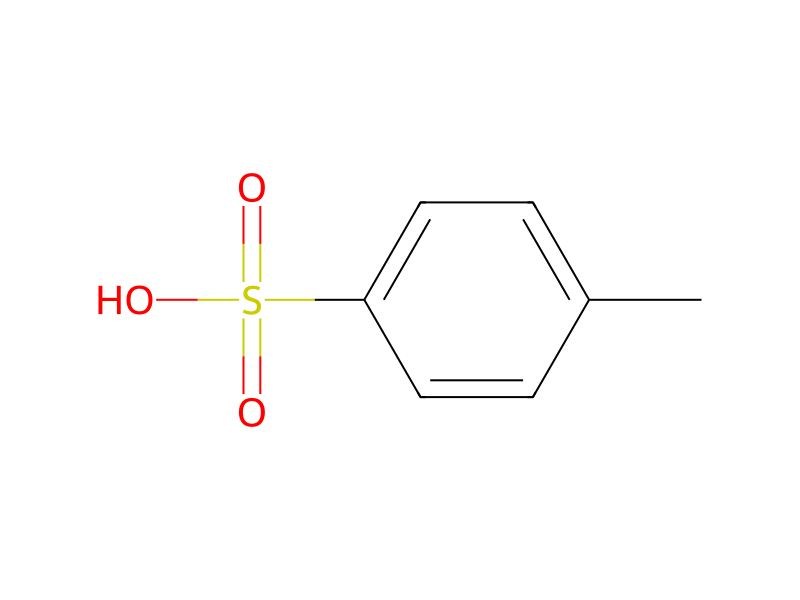
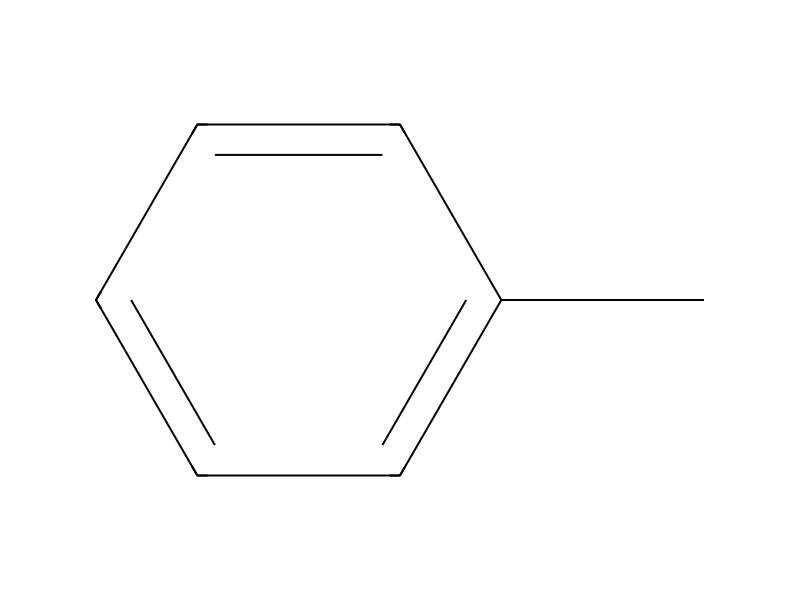
C([O:4][C:5]1[CH:6]=[C:7]2[C:12](=[O:13])[O:11][C:9](=O)[C:8]2=[CH:14][CH:15]=1)(=O)C.[CH2:16]([NH2:20])[CH:17]([CH3:19])[CH3:18].C1(C)C=CC(S(O)(=O)=O)=CC=1>C1(C)C=CC=CC=1>[OH:4][C:5]1[CH:6]=[C:7]2[C:12](=[O:13])[N:20]([CH2:16][CH:17]([CH3:19])[CH3:18])[C:9](=[O:11])[C:8]2=[CH:14][CH:15]=1Komponenten
Edukt 3


Produkt 1

Reagenzien, Katalysatoren, Lösungsmittel 1
Reaktionsbedingungen
- Temperatur
- 140 °C
Versuchsvorschrift
4-Hydroxy-N-isobutylphthalimide is prepared as described in Example 2, starting with 7.26 g of 4-acetoxyphthalic anhydride, 7.35 cm3 of isobutylamine and a catalytic amount of para-toluenesulfonic acid in 75 cm3 of toluene. The reaction mixture is heated at a temperature in the region of 140° C. for 4 hours and then cooled to a temperature in the region of 40° C. and concentrated to dryness under reduced pressure (2 kPa). The residue is taken up in 175 cm3 of ethyl acetate and 150 cm3 of saturated sodium hydrogen carbonate solution. The aqueous phase is separated out after settling has taken place and then extracted twice with 150 cm3 of ethyl acetate. The organic extracts are combined, washed with 200 cm3 of saturated brine, dried over magnesium sulfate, filtered and then concentrated to dryness under reduced pressure (2 kPa) at a temperature in the region of 40° C. The residue is taken up and stirred in 100 cm3 of cyclohexane at a temperature in the region of 20° C. for 1.5 hours and then filtered. The solid is dried in a desiccator under reduced pressure (2 kPa) at a temperature in the region of 20° C. 4.0 g of 4-hydroxy-N-isobutylphthalimide are thus obtained in the form of a white solid. (Rf=0.25, thin layer chromatography on silica gel, eluent: cyclohexane/ethyl acetate (75/25 by volume)).
Aufarbeitung
- custom4-Hydroxy-N-isobutylphthalimide is prepared
- temperaturecooled to a temperature in the region of 40° C.
- concentrationconcentrated to dryness under reduced pressure (2 kPa)
- customThe aqueous phase is separated out after settling
- extractionextracted twice with 150 cm3 of ethyl acetate
- washwashed with 200 cm3 of saturated brine
- dry with materialdried over magnesium sulfate
- filtrationfiltered
- concentrationconcentrated to dryness under reduced pressure (2 kPa) at a temperature in the region of 40° C
- filtrationfiltered
- customThe solid is dried in a desiccator under reduced pressure (2 kPa) at a temperature in the region of 20° C
Quellen und Nachweise
- ORD-Eintrag
- ord-5e041bb17b184daa98c689fd6550a79d
- Quelldatensatz
- uspto-grants-2006_07
- Patentnummer
- US07078428B2
Notizen zur Reaktion
Wird geladen…