O-Phenylenediamine → 2,3-bis(4-aminophenyl)-quinoxaline
Reaction equation

[NH2:1][C:2]1[CH:7]=[CH:6][C:5]([C:8]([C:10]([C:12]2[CH:17]=[CH:16][C:15]([NH2:18])=[CH:14][CH:13]=2)=O)=O)=[CH:4][CH:3]=1.[C:19]1([NH2:26])[CH:24]=[CH:23][CH:22]=[CH:21][C:20]=1[NH2:25]>C(O)(=O)C>[NH2:1][C:2]1[CH:7]=[CH:6][C:5]([C:8]2[C:10]([C:12]3[CH:17]=[CH:16][C:15]([NH2:18])=[CH:14][CH:13]=3)=[N:26][C:19]3[C:20](=[CH:21][CH:22]=[CH:23][CH:24]=3)[N:25]=2)=[CH:4][CH:3]=1Participants
4
Reactant 2
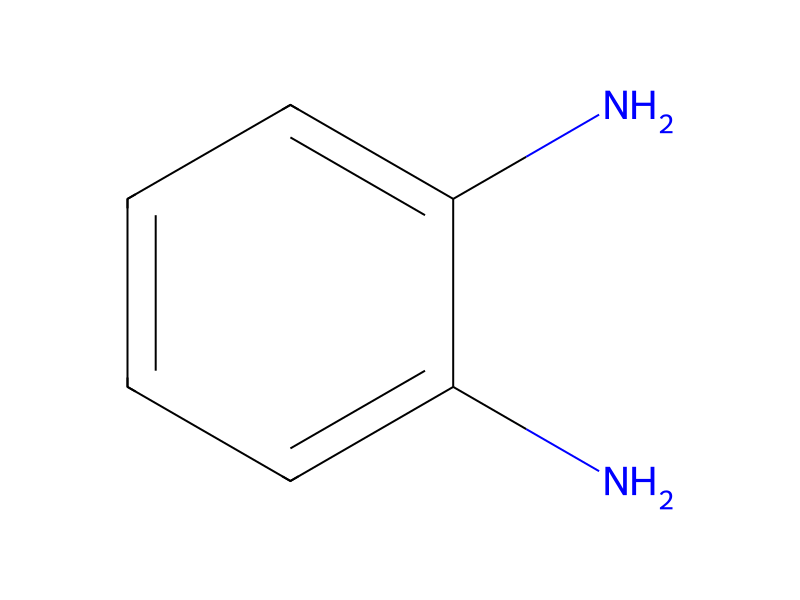

Product 1

Reagents, catalysts & solvents 1

Conditions
- Temperature
- 50 °C
Procedure
A mixture of 1.0 g (4.17 mmole) of 4,4′-diaminobenzil and 0.45 g of o-phenylenediamine in 250 ml glacial acetic acid was heated at 50° C. for 15 mins., then stirred for 16 hours at room temperature. The mixture was then heated to 80° C. and allowed to cool slowly. The solvent was removed under vacuum and the residue was redissolved in ethanol and that was removed under vacuum.
Workup
- temperatureThe mixture was then heated to 80° C.
- temperatureto cool slowly
- customThe solvent was removed under vacuum
- dissolutionthe residue was redissolved in ethanol
- customthat was removed under vacuum
Sources & evidence
- ORD record
- ord-ae4cc4d8f82c4b0a8705dcec0abc13ab
- Source dataset
- uspto-grants-2006_04
- Patent number
- US07034026B2
Reaction notes
Loading…