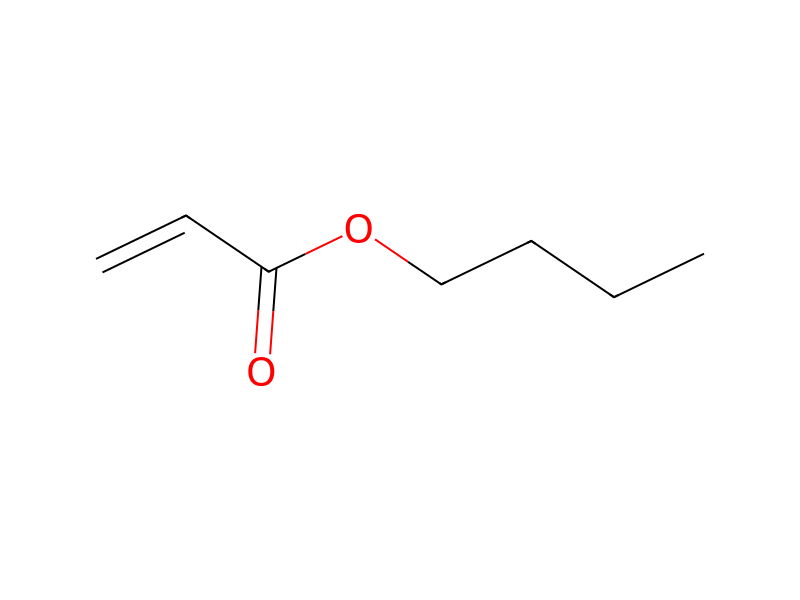
Acrylic Acid → Butyl prop-2-enoate;prop-2-enoic acid;styrene
Reaction equation

C(OS(C1C=CC=CC=1)(=O)=O)CCCCCCCCCCC.[Na].[CH2:24]=[CH:25][C:26]1[CH:31]=[CH:30][CH:29]=[CH:28][CH:27]=1.[C:32]([O:36][CH2:37][CH2:38][CH2:39][CH3:40])(=[O:35])[CH:33]=[CH2:34].[C:41]([OH:45])(=[O:44])[CH:42]=[CH2:43].C(S)CCCCCCCCCCC>O>[CH2:24]=[CH:25][C:26]1[CH:31]=[CH:30][CH:29]=[CH:28][CH:27]=1.[C:32]([O:36][CH2:37][CH2:38][CH2:39][CH3:40])(=[O:35])[CH:33]=[CH2:34].[C:41]([OH:45])(=[O:44])[CH:42]=[CH2:43]Participants
7






Procedure
In a reactor equipped with a reflux condenser, a stirrer, a nitrogen-introducing pipe, and a monomer dripping funnel, 3.3 parts of sodium dodecylbenzenesulfonate is dissolved in 3,824 parts of ion exchange water. Subsequently, 30.6 parts of styrene, 9.4 parts of butyl acrylate, 1.2 parts of acrylic acid dimer, and 0.3 parts of dodecanethiol are added thereto, and thoroughly stirred at room temperature for emulsification stabilization (emulsified liquid 1).
Workup
- customIn a reactor equipped with a reflux condenser, a stirrer
- additiona nitrogen-introducing pipe
Sources & evidence
- ORD record
- ord-84a817739218448f800ce098b60147f5
- Source dataset
- uspto-grants-2013_01
- Patent number
- US08343703B2
Reaction notes
Loading…