Ammonium formate → 4-[4-(Trifluoromethoxy)phenoxy]pyridine
Reaction equation

[F:1][C:2]([F:19])([F:18])[O:3][C:4]1[CH:17]=[CH:16][C:7]([O:8][C:9]2[CH:14]=[CH:13][N+:12]([O-])=[CH:11][CH:10]=2)=[CH:6][CH:5]=1.C([O-])=O.[NH4+]>C(O)C.[Pd]>[F:19][C:2]([F:1])([F:18])[O:3][C:4]1[CH:5]=[CH:6][C:7]([O:8][C:9]2[CH:10]=[CH:11][N:12]=[CH:13][CH:14]=2)=[CH:16][CH:17]=1Participants
5
Reactant 2
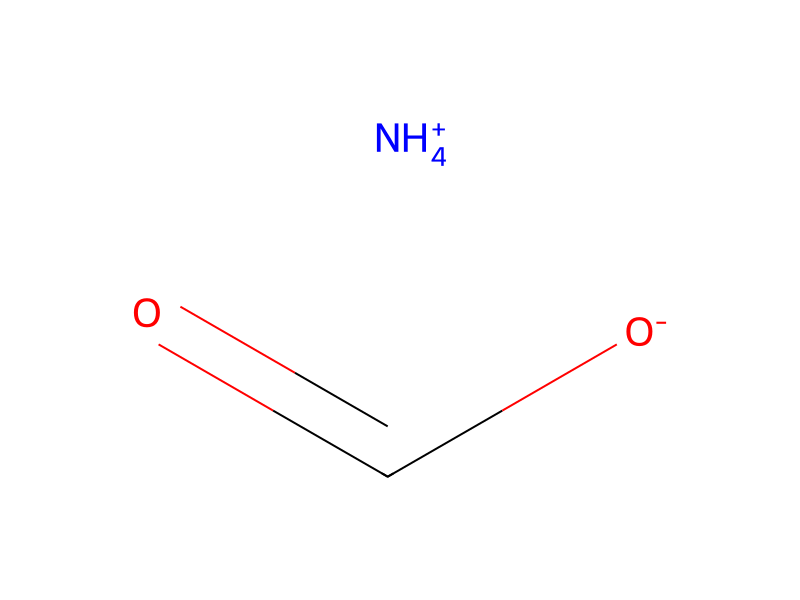

Product 1

Reagents, catalysts & solvents 2


Conditions
- Temperature
- 20 °C
Procedure
After 4-[4-(Trifluoromethoxy)phenoxy]pyridine-N-oxide (50 mg) was dissolved in ethanol (1.8 mL) and 10 w/w % palladium on carbon (4 mg) was added. And then Ammonium formate (120 mg) was added. The resulting mixture was stirred at 20° C. for 6 hr. The reaction mixture was filtered to remove the catalyst followed by concentration in vacuo to give a residual substance. And the a residual substance was extracted with dichloromethane. The extract was condensed under reduced pressure to give 46 mg (98% yield) of a colorless oily target compound.
Workup
- filtrationThe reaction mixture was filtered
- customto remove the catalyst
- concentrationfollowed by concentration in vacuo
- customto give a residual substance
- extractionAnd the a residual substance was extracted with dichloromethane
- customcondensed under reduced pressure
Sources & evidence
- ORD record
- ord-8cc03881e8dc414dad07b47ddcdd2e07
- Source dataset
- uspto-grants-2013_01
- Patent number
- US08344148B2
Reaction notes
Loading…