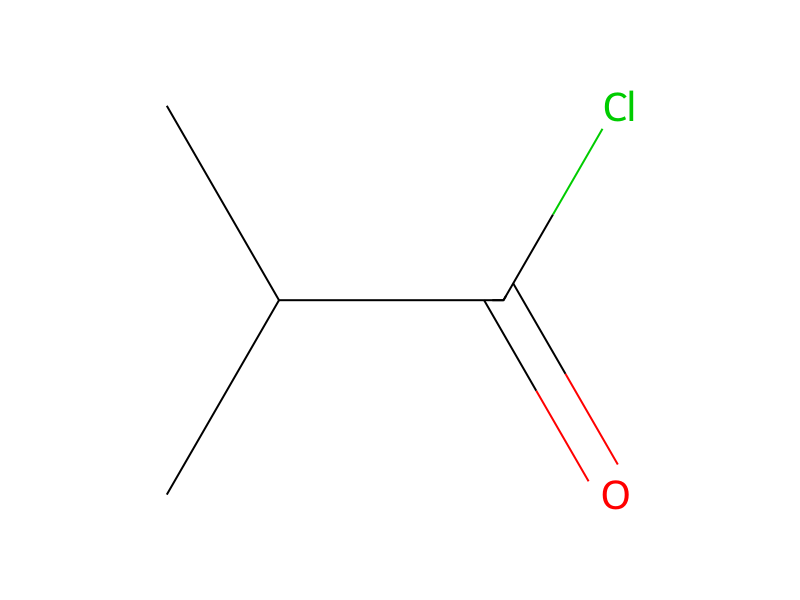
Isobutyryl chloride → 7-Bromo-2-(propan-2-yl)[1,2,4]triazolo[1,5-a]pyridine
Reaction equation

[CH3:1][C:2]1[CH:7]=C(C)C=C(C)[C:3]=1S([O-])(=O)=O.[NH2:14][N+:15]1[CH:20]=[CH:19][C:18]([Br:21])=[CH:17][C:16]=1[NH2:22].C(Cl)(=O)C(C)C>N1C=CC=CC=1>[Br:21][C:18]1[CH:19]=[CH:20][N:15]2[N:14]=[C:1]([CH:2]([CH3:7])[CH3:3])[N:22]=[C:16]2[CH:17]=1Participants
4



Conditions
- Temperature
- 100 °C
Procedure
A mixture of 1,2-diamino-4-bromopyridinium 2,4,6-trimethylbenzenesulfonate (2 g, 5.15 mmol) and isobutyryl chloride (809 μl, 7.73 mmol) in pyridine (12 ml) is stirred for 18 hours at 100° C. The solvent is evaporated and the orange residue triturated for 2 hrs with sat. aqueous sodium hydrogen carbonate solution. The solid is collected by filtration, washed several times with water and dried affording 7-bromo-2-isopropyl-[1,2,4]triazolo[1,5-a]pyridine (378 mg, 30.6%) as a light brown solid. MS: m/z=240; 242 (M+H+).
Workup
- customThe solvent is evaporated
- customthe orange residue triturated for 2 hrs with sat. aqueous sodium hydrogen carbonate solution
- filtrationThe solid is collected by filtration
- washwashed several times with water
- customdried
Sources & evidence
- ORD record
- ord-d19fb5a41bf64dd3825afc04911b5450
- Source dataset
- uspto-grants-2013_01
- Patent number
- US08349824B2
Reaction notes
Loading…