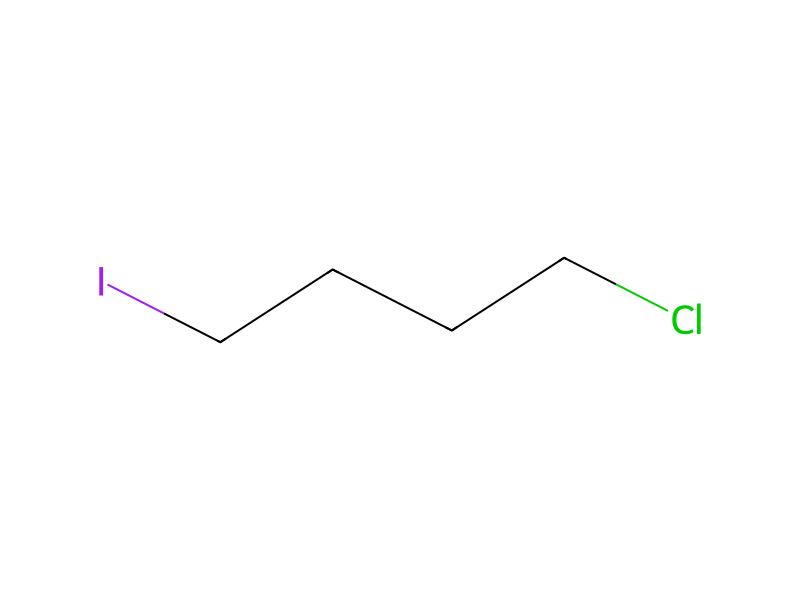
1-Chloro-4-iodobutane → 6-Chloro-2-(2,4-difluorophenyl)hexanoic acid
Reaction equation

[F:1][C:2]1[CH:7]=[C:6]([F:8])[CH:5]=[CH:4][C:3]=1[CH2:9][C:10]([OH:12])=[O:11].C[Si]([N-][Si](C)(C)C)(C)C.[Na+].[Cl:23][CH2:24][CH2:25][CH2:26][CH2:27]I>>[Cl:23][CH2:24][CH2:25][CH2:26][CH2:27][CH:9]([C:3]1[CH:4]=[CH:5][C:6]([F:8])=[CH:7][C:2]=1[F:1])[C:10]([OH:12])=[O:11]Participants
4


Procedure
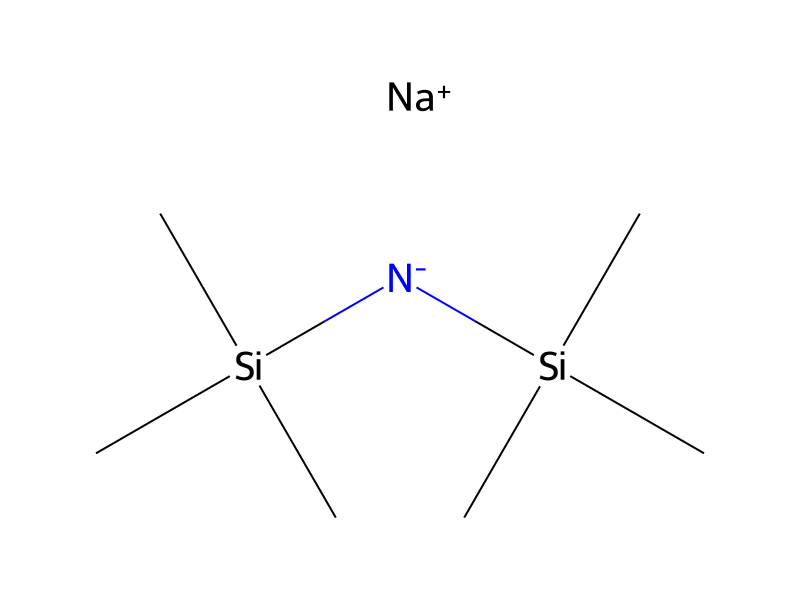
Step AM (1): 2-(2,4-Difluorophenyl)acetic acid (2.5 g, 14.52 mmol) was deprotonated with NaHMDS (1.0 M in THF, 29.0 mL, 29.0 mmol) and reacted with 1-chloro-4-iodobutane (1.78 mL, 14.5 mmol) using a procedure analogous to Step AC (1) to afford 6-chloro-2-(2,4-difluorophenyl)hexanoic acid (3.39 g, 89% yield). LC-MS (M−H)− 261.1. The crude product was used for subsequent chemistry without purification.
Sources & evidence
- ORD record
- ord-fbd92aeccb2a4086b94935b0136d51b9
- Source dataset
- uspto-grants-2013_01
- Patent number
- US08349880B2
Reaction notes
Loading…