N-bromobutanimide → 7-Bromo-9-(4-fluorophenyl)-1,4-dioxaspiro[4.5]decan-8-on
Reaction equation

[Br:1]N1C(=O)CCC1=O.[F:9][C:10]1[CH:15]=[CH:14][C:13]([CH:16]2[CH2:25][C:20]3([O:24][CH2:23][CH2:22][O:21]3)[CH2:19][CH:18]=[C:17]2[O:26][Si](C)(C)C)=[CH:12][CH:11]=1>C1COCC1.O.CCOC(C)=O>[Br:1][CH:18]1[C:17](=[O:26])[CH:16]([C:13]2[CH:14]=[CH:15][C:10]([F:9])=[CH:11][CH:12]=2)[CH2:25][C:20]2([O:24][CH2:23][CH2:22][O:21]2)[CH2:19]1Participants
5
Reactant 2


Product 1

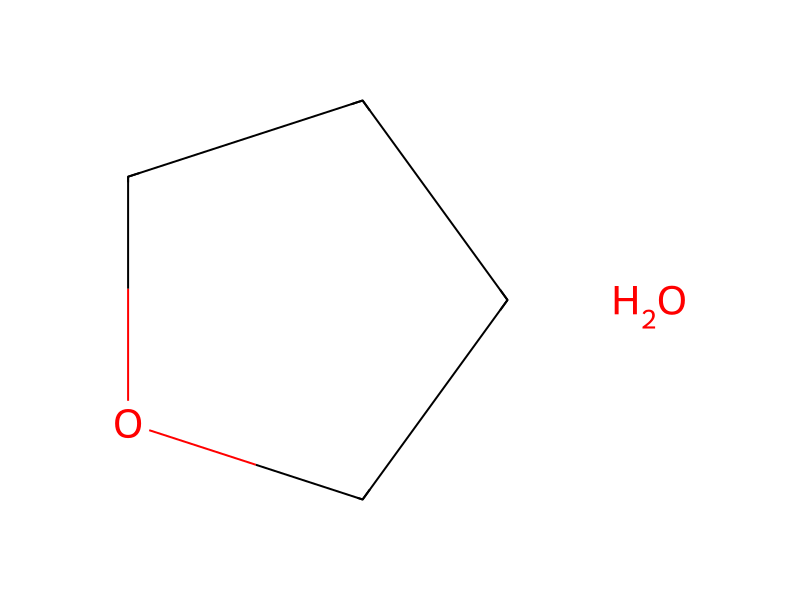
Reagents, catalysts & solvents 2

Procedure
Step AAC (2): Followed a method described by A. de Meijer et. al Chem. Eur. J. 2007, 13, 3739. N-bromosuccinimide (52 mg, 0.29 mmol) was added to a solution of (9-(4-fluorophenyl)-1,4-dioxaspiro[4.5]dec-7-en-8-yloxy)trimethylsilane (89 mg, 276 mmol) in THF/water (1:1, 1.4 mL). The resulting mixture was allowed to stir for 2 hr. The crude reaction was diluted with EtOAc and washed with water. The organic layer was concentrated in vacuo to afford 7-bromo-9-(4-fluorophenyl)-1,4-dioxaspiro[4.5]decan-8-on (230 mg, 253%) yield). The crude product was used for subsequent chemistry without purification or characterization.
Workup
- customThe crude reaction
- washwashed with water
- concentrationThe organic layer was concentrated in vacuo
Sources & evidence
- ORD record
- ord-8f08471f7412444ead89459a4021daba
- Source dataset
- uspto-grants-2013_01
- Patent number
- US08349880B2
Reaction notes
Loading…