Hydroxylamine → Acetamide, 2-(hydroxyimino)-N-phenyl-
Reaction equation

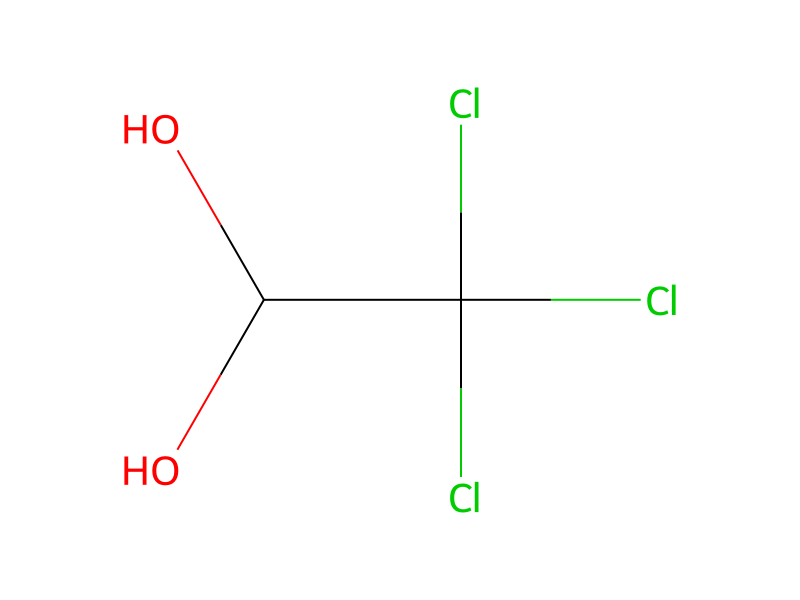
C[C:2]1[C:8](C)=[CH:7][CH:6]=[CH:5][C:3]=1[NH2:4].[NH2:10][OH:11].Cl[C:13](Cl)(Cl)[CH:14]([OH:16])O>>[CH:7]1[CH:8]=[CH:2][C:3]([NH:4][C:14](/[CH:13]=[N:10]/[OH:11])=[O:16])=[CH:5][CH:6]=1Participants



Procedure
The starting material of 2,3-dimethyl aniline (1) was mixed and condensed with hydroxylamine and chloral hydrate to yield isonitrosoacetanilide (2), then to yield isatin (3) by acid-catalyzed cyclization and 2-amino-3,4-dimethyl-benzoic acid (4) by an oxidative ring cleavage reaction. The total yield of the first three steps was 37%. The steps involved in hydroxylamine and chloral hydrate, both of which were toxic. Additionally, the steps were a multi-phase reaction, requiring careful control on the reaction time and temperature. Under carefully-controlled conditions, 2-amino-3,4-dimethyl-benzoic acid (4) was diazotized to yield an iodide (5). The iodide was condensed with 2-hydroxyphenylacetic acid to yield 2-[2-(carboxymethyl)phenoxy]-3,4-dimethyl-benzoic acid (6), which was further cyclized to yield DMXAA. The total yield of the six steps was about 12%.
Sources & evidence
- ORD record
- ord-ae28b60cdb994e948206290148eb9750
- Source dataset
- uspto-grants-2013_01
- Patent number
- US08350065B2
Reaction notes
Loading…