Sodium Thiosulfate → 6-Chloro-2-(4-fluorophenyl)-3-iodoimidazo[1,2-b]pyridazine
Reaction equation

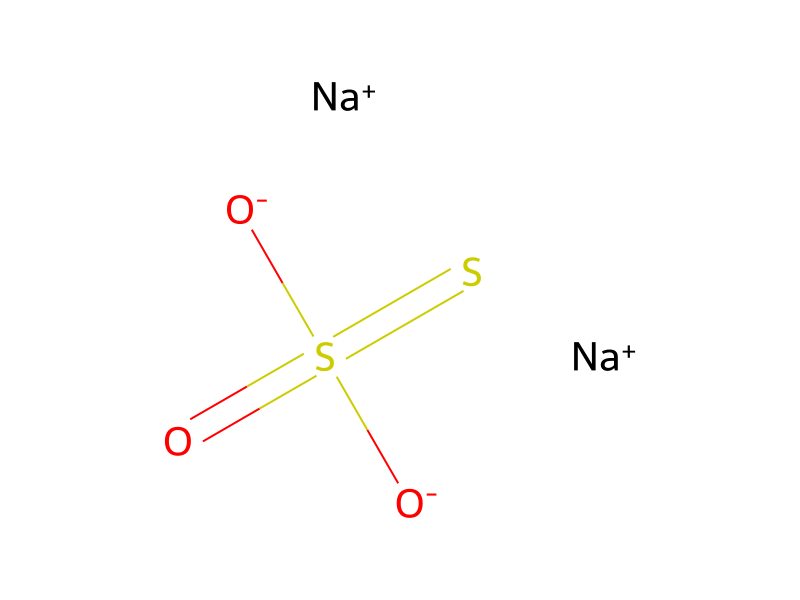
[Cl:1][C:2]1[CH:3]=[CH:4][C:5]2[N:6]([CH:8]=[C:9]([C:11]3[CH:16]=[CH:15][C:14]([F:17])=[CH:13][CH:12]=3)[N:10]=2)[N:7]=1.[I:18]Cl.S([O-])([O-])(=O)=S.[Na+].[Na+]>C(Cl)(Cl)Cl>[Cl:1][C:2]1[CH:3]=[CH:4][C:5]2[N:6]([C:8]([I:18])=[C:9]([C:11]3[CH:12]=[CH:13][C:14]([F:17])=[CH:15][CH:16]=3)[N:10]=2)[N:7]=1Participants




Procedure
To a solution, cooled to 0° C., of 5.20 g (21.0 mmol) of 6-chloro-2-(4-fluorophenyl)imidazo[1,2-b]pyridazine (CAS No.: 244081-70-7) in 130 mL of chloroform is rapidly added dropwise a solution of 6.61 g (40.9 mmol) of iodine monochloride in 40 mL of chloroform. After cooling to room temperature and stirring for 4 hours, the mixture is treated with aqueous 5% sodium thiosulfate solution. The product is extracted with dichloromethane. The organic phase is dried by filtration through a hydrophobic filter cartridge and concentrated under reduced pressure. The residue is triturated in acetonitrile, and the solid is isolated after filtering off and rinsing with diisopropyl ether. 5.7 g of a beige-colored powder are isolated after drying under vacuum.
Workup
- extractionThe product is extracted with dichloromethane
- customThe organic phase is dried by filtration through a hydrophobic filter cartridge
- concentrationconcentrated under reduced pressure
- customThe residue is triturated in acetonitrile
- customthe solid is isolated
- filtrationafter filtering off
- washrinsing with diisopropyl ether
Sources & evidence
- ORD record
- ord-471ec68d71cd44ec9d7cd447d827b676
- Source dataset
- uspto-grants-2013_01
- Patent number
- US08354405B2
Reaction notes
Loading…