Potassium Carbonate → 4-Nitro-1-(2-pyrrolidin-1-yl-ethyl)-1H-pyrazole
Reaction equation

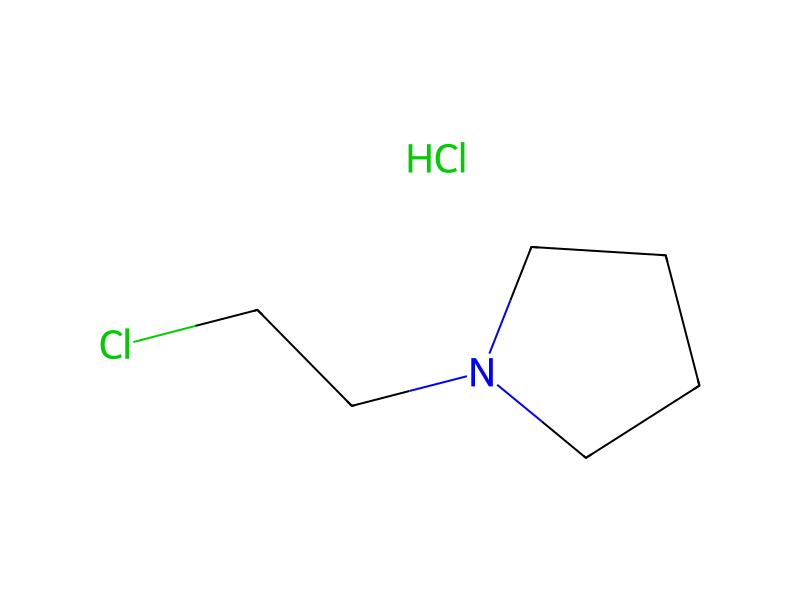
Cl.Cl[CH2:3][CH2:4][N:5]1[CH2:9][CH2:8][CH2:7][CH2:6]1.C(=O)([O-])[O-].[K+].[K+].[N+:16]([C:19]1[CH:20]=[N:21][NH:22][CH:23]=1)([O-:18])=[O:17]>CC(C)=O.O>[N+:16]([C:19]1[CH:20]=[N:21][N:22]([CH2:3][CH2:4][N:5]2[CH2:9][CH2:8][CH2:7][CH2:6]2)[CH:23]=1)([O-:18])=[O:17]Participants
6





Procedure
N-(2-chloroethyl)pyrrolidine hydrochloride (752 mg, 4.42 mmol), potassium carbonate (0.534 ml, 8.84 mmol) and 4-nitro-1H-pyrazole (500 mg, 4.42 mmol) were combined in acetone (20 ml) and the reaction was stirred at reflux for 16 hours. The reaction mixture was diluted with 75 mL water and extracted with ethyl acetate (3×20 mL). The combined organics were dried (Na2SO4), filtered, and concentrated to give the title compound. MS (ESI(+)) m/e 210.9 (M+H)+.
Workup
- temperatureat reflux for 16 hours
- extractionextracted with ethyl acetate (3×20 mL)
- dry with materialThe combined organics were dried (Na2SO4)
- filtrationfiltered
- concentrationconcentrated
Sources & evidence
- ORD record
- ord-fe86f9390b31462fb10f6df2dc4b38ce
- Source dataset
- uspto-grants-2013_01
- Patent number
- US08354422B2
Reaction notes
Loading…