Calcium acetate monohydrate → Calcium Acetate
Reaction equation

O.[C:2]([O-:5])(=[O:4])[CH3:3].[Ca+2:6].[C:7]([O-:10])(=[O:9])[CH3:8]>O>[C:2]([O-:5])(=[O:4])[CH3:3].[Ca+2:6].[C:7]([O-:10])(=[O:9])[CH3:8]Participants
Reactant 1

Product 1
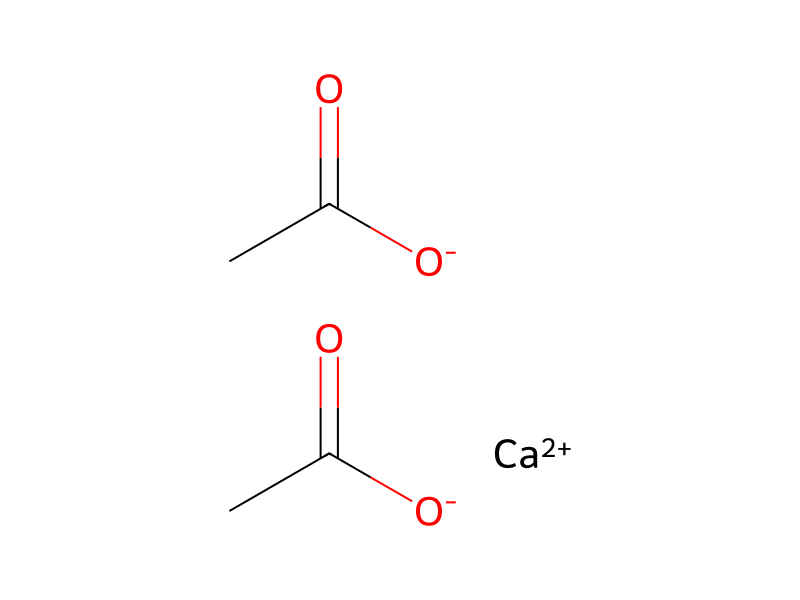
Reagents, catalysts & solvents 1

Procedure
First, 60 g of hydrated alumina (trade name: Disperal HP14 available from Sasol Ltd.) was added to 800 g of pure water, and 2.11 g of calcium acetate monohydrate (element content of Ca/element content of Al=0.012) was added to the resultant mixture. The resultant dispersoid was dried by a spray-drying method to obtain hydrated alumina 2 which calcium acetate adhered to. The drying temperature (gas phase temperature) was 170° C. Subsequently, the hydrated alumina 2 was added to 1 L of pure water, and the resultant mixture was cleaned by a method in which solid-liquid separation is performed on a mixture using a centrifuge to collect a solid. The cleaning was performed three times in total, whereby hydrated alumina 3 which calcium acetate adhered to was obtained. The result of (element content of Ca/element content of Al) of the hydrated alumina 3 measured by ICP-OES was 0.001. The acid site strength of the hydrated alumina 3 was measured by temperature-programmed desorption (TPD) that determines surface activity using ammonia gas. As a result, the presence of acid sites was not confirmed, and it was found that calcium acetate adhered to hydrated alumina.
Workup
- customThe resultant dispersoid was dried by a spray-drying method
Sources & evidence
- ORD record
- ord-09ffa5b1c400496b8de8970f7a4801b6
- Source dataset
- uspto-grants-2013_01
- Patent number
- US08357438B2
Reaction notes
Loading…