Diethyl Ether → 2-(4,5-Dichloro-2-fluorophenyl)-4,4,5,5-tetramethyl-1,3,2-dioxaborolane
Reaction equation

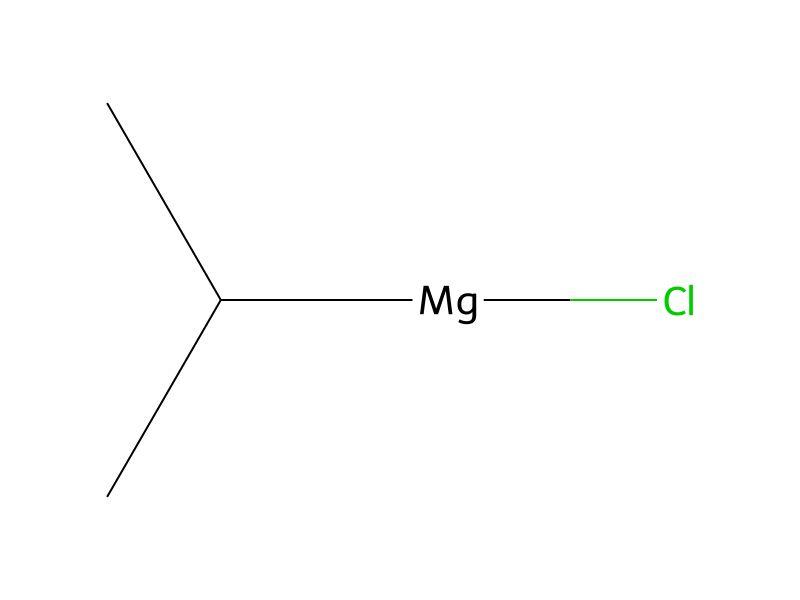
Br[C:2]1[CH:7]=[C:6]([Cl:8])[C:5]([Cl:9])=[CH:4][C:3]=1[F:10].C([Mg]Cl)(C)C.C(O[B:20]1[O:24][C:23]([CH3:26])([CH3:25])[C:22]([CH3:28])([CH3:27])[O:21]1)(C)C.C(OCC)C>O1CCCC1>[Cl:9][C:5]1[C:6]([Cl:8])=[CH:7][C:2]([B:20]2[O:24][C:23]([CH3:26])([CH3:25])[C:22]([CH3:28])([CH3:27])[O:21]2)=[C:3]([F:10])[CH:4]=1Participants
Reactant 4



Product 1

Reagents, catalysts & solvents 1

Conditions
- Temperature
- -10 °C
Procedure
1-Bromo-4,5-dichloro-2-fluorobenzene (1.0 g, 4.11 mmol) was dissolved in tetrahydrofuran (THF; 20 mL) and cooled to −10° C. A 2.0M solution of isopropylmagnesium chloride (2.3 mL, 4.6 mmol) in THF was added dropwise via a syringe. The reaction mixture was stirred at −10° C. for 1 hour, allowed to warm toward 0° C. for 1 hour, then cooled to −10° C. again. A solution of 2-isopropoxy-4,4,5,5-tetramethyl[1,3,2]dioxaborolane (0.85 g, 4.56 mmol) in THF (1.0 mL) was then added dropwise and the reaction was allowed to warm to ambient temperature. The reaction mixture was then added to diethyl ether and extracted with 1N sodium hydroxide. The aqueous phases were combined, acidified to pH 3 with concentrated HCl, and extracted with dichloromethane twice. The organic phases were combined, dried, filtered and concentrated to give the title compound (0.85 g, 71% yield) that was used without further purification: 1H NMR (CDCl3): δ 7.73 (d, 1H), 7.12 (d, 1H), 1.3 (s, 12H).
Workup
- temperatureto warm toward 0° C. for 1 hour
- temperaturecooled to −10° C. again
- temperatureto warm to ambient temperature
- extractionextracted with 1N sodium hydroxide
- extractionextracted with dichloromethane twice
- customdried
- filtrationfiltered
- concentrationconcentrated
Sources & evidence
- ORD record
- ord-8efc47c34f71452fa0a68ba124cec297
- Source dataset
- uspto-grants-2013_01
- Patent number
- US08357633B2
Reaction notes
Loading…