Ammonia → 1,2,3,4-Tetrahydro-7-nitroisoquinoline
Reaction equation

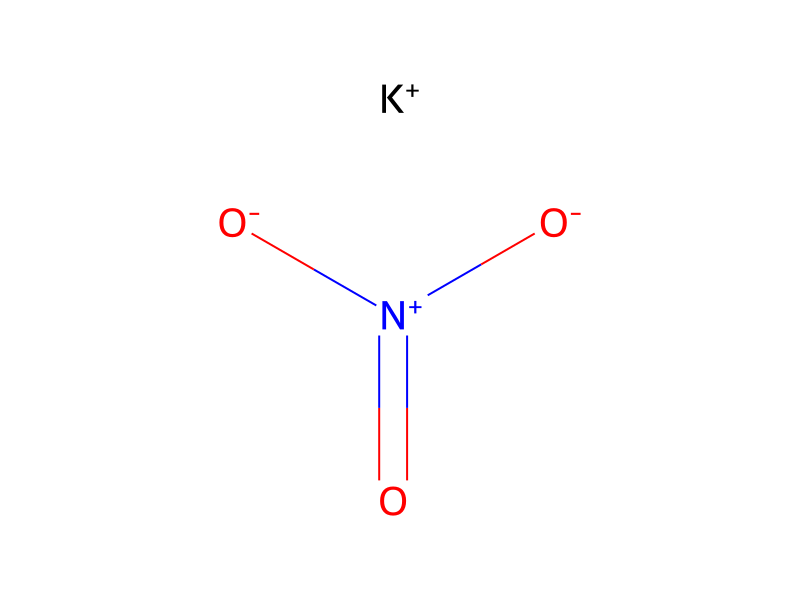
[CH2:1]1[C:10]2[C:5](=[CH:6][CH:7]=[CH:8][CH:9]=2)[CH2:4][CH2:3][NH:2]1.S(=O)(=O)(O)O.[N+:16]([O-])([O-:18])=[O:17].[K+].N.Cl>>[N+:16]([C:8]1[CH:9]=[C:10]2[C:5]([CH2:4][CH2:3][NH:2][CH2:1]2)=[CH:6][CH:7]=1)([O-:18])=[O:17]Participants





Conditions
- Temperature
- 0 °C
Procedure
1,2,3,4-Tetrahydroisoquinoline (50 g; 1 equiv.) was added at 0° C., in the course of 90 minutes, to 185 ml of sulfuric acid, and the reaction mixture was stirred for 30 minutes at 0° C. Potassium nitrate (40.7 g; 1.2 equiv.) was then added in portions, and stirring was carried out for 15 hours at room temperature. When the conversion was complete, the reaction mixture was shaken on 500 g of ice and adjusted to pH 8-9 with ammonia solution. Extraction with chloroform was then carried out 3 times, and the combined organic phases were dried over sodium sulfate and concentrated under reduced pressure. The residue was taken up in IPA (500 ml) and cooled to 0° C., and hydrochloric acid (2 equiv.) was added. The resulting solid was filtered out and recrystallised from methanol. 7-Nitro-1,2,3,4-tetrahydroisoquinoline (35 g; 52.3%) was obtained in the form of a white solid.
Workup
- stirringstirring
- waitwas carried out for 15 hours at room temperature
- extractionExtraction with chloroform
- dry with materialthe combined organic phases were dried over sodium sulfate
- concentrationconcentrated under reduced pressure
- temperaturecooled to 0° C.
- filtrationThe resulting solid was filtered out
- customrecrystallised from methanol
Sources & evidence
- ORD record
- ord-6fec767c26de44b59ad830e0f8a18859
- Source dataset
- uspto-grants-2013_01
- Patent number
- US08357717B2
Reaction notes
Loading…