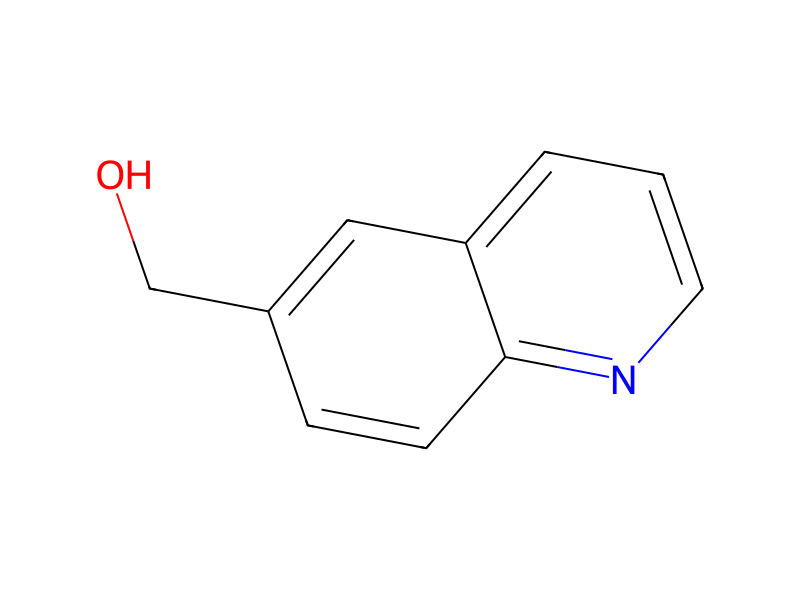
Acetone → 6-Hydroxymethylquinoline
Reaction equation

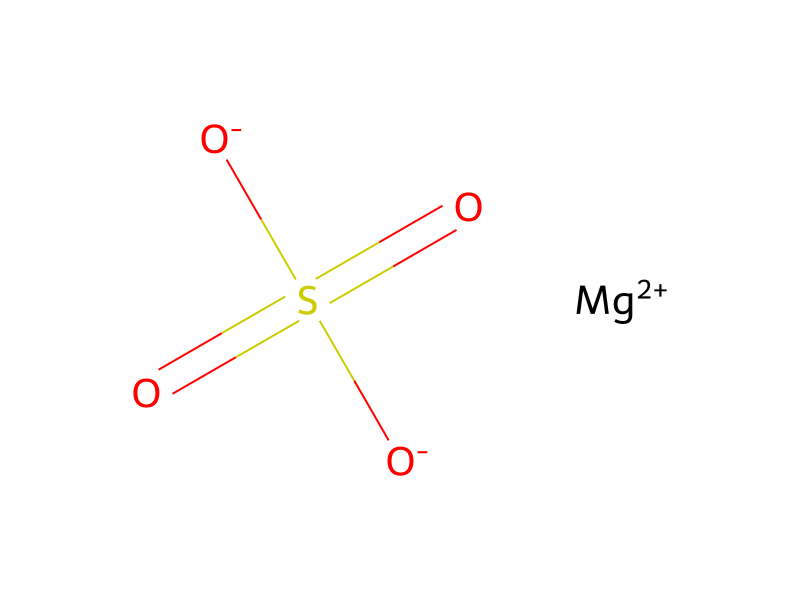
[N:1]1[C:10]2[C:5](=[CH:6][C:7]([C:11](OC)=[O:12])=[CH:8][CH:9]=2)[CH:4]=[CH:3][CH:2]=1.[H-].[H-].[H-].[H-].[Li+].[Al+3].CC(C)=O.[O-]S([O-])(=O)=O.[Mg+2]>C1COCC1>[N:1]1[C:10]2[C:5](=[CH:6][C:7]([CH2:11][OH:12])=[CH:8][CH:9]=2)[CH:4]=[CH:3][CH:2]=1Participants
6




Conditions
- Temperature
- 0 °C
Procedure
Similar to the method described by C. Kaslow and W. Clark, (JOC 18, 55, 1953), to a stirred solution of methyl quinoline-6-carboxylate (10 g, 53 mmol) in THF (200 mL) at 0° C. was added LiAlH4 (1.3 g, 14.9 mmol) by small portion. The resulting mixture was stirred at 0° C. for 2 h then warmed to RT and stirred for 3 h. Acetone (10 mL) was added followed by MgSO4×10H2O. The resulting mixture was stirred for 1.5 h at RT and filtered over a silica pad. Solvents were removed to give the crude quinolin-6-yl-methanol.
Workup
- temperaturethen warmed to RT
- stirringstirred for 3 h
- stirringThe resulting mixture was stirred for 1.5 h at RT
- filtrationfiltered over a silica pad
- customSolvents were removed
Sources & evidence
- ORD record
- ord-63db1eda9cb842938634dd598a7b21e7
- Source dataset
- uspto-grants-2005_04
- Patent number
- US06878714B2
Reaction notes
Loading…