Ethyl orthoformate → ethyl 5-formyl-2,4-dimethyl-1H-pyrrole-3-carboxylate
Reaction equation

[CH2:1]([O:3][C:4]([C:6]1[C:7]([CH3:19])=[C:8]([C:12](OC(C)(C)C)=[O:13])[NH:9][C:10]=1[CH3:11])=[O:5])[CH3:2].C(OCC)(OCC)OCC>FC(F)(F)C(O)=O>[CH2:1]([O:3][C:4]([C:6]1[C:7]([CH3:19])=[C:8]([CH:12]=[O:13])[NH:9][C:10]=1[CH3:11])=[O:5])[CH3:2]Participants
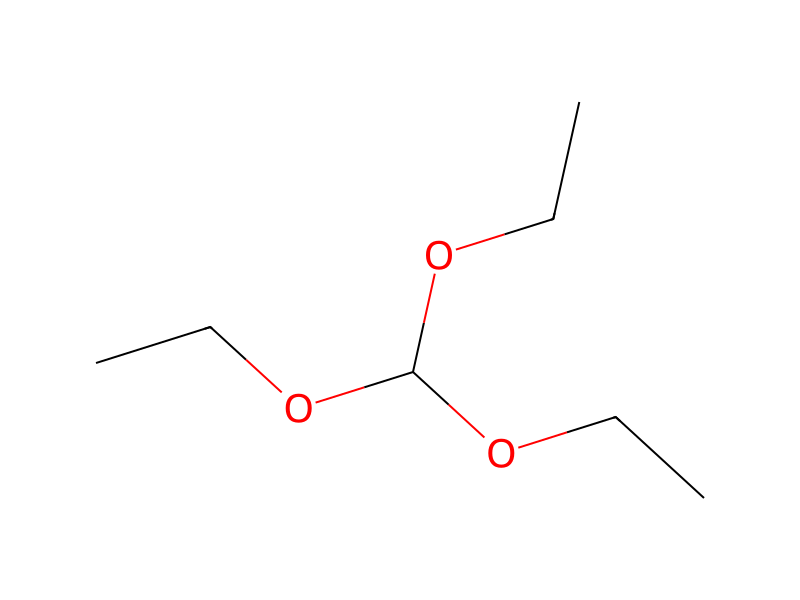


Conditions
- Temperature
- 40 °C
Procedure
3,5-Dimethyl-1H-pyrrole-2,4-dicarboxylic acid 2-tert-butyl ester 4-ethyl ester (80.1 g, 0.3 mol) and 400 mL trifluoroacetic acid were stirred for 5 minutes in a 2 L 3-neck round bottom flask equipped with mechanical stirring and warmed to 40° C. in an oil bath. The mixture was then cooled to −5° C. and triethyl orthoformate (67.0 g, 0.45 mol) was added all at once. The temperature increased to 15° C. The mixture was stirred for about 1 minute, removed from the cold bath and then stirred for 1 hour. The trifluoroacetic acid was removed by rotary evaporation and the residue put in the refrigerator where it solidified. The solid was dissolved by warming and poured into 500 g of ice. The mixture was extracted with 800 mL of dichloromethane to give a red solution and a brown precipitate, both of which were saved. The precipitate was isolated and washed with 150 mL of saturated sodium bicarbonate solution. The dichloromethane phase was also washed with 150 mL of sodium bicarbonate. The dichloromethane solution was then washed 3 more times with 100 mL of water. The dichloromethane solution was evaporated to dryness. The dark residue which remained was recrystallized twice from ethyl acetate containing Darco carbon black to give golden yellow needles. The brown precipitate was recrystallized from 350 mL ethyl acetate likewise containing Darco to give a yellow-red solid. All the recrystallized solids were combined and recrystallized from 500 mL of ethanol to give 37.4 g (63.9%) of 5-formyl-2,4-dimethyl-1H-pyrrole-3-carboxylic acid ethyl ester as yellow needles (mp 165.6-166.3° C., lit. 163-164° C.). The residue obtained after evaporationg of the ethyl acetate and ethanol mother liquors were combined and recrystallized from 500 mL of ethanol to give a second crop (10.1 g) or product as dirty yellow needles.
Workup
- customequipped
- temperatureThe mixture was then cooled to −5° C.
- temperatureThe temperature increased to 15° C
- stirringThe mixture was stirred for about 1 minute
- customremoved from the cold bath
- stirringstirred for 1 hour
- customThe trifluoroacetic acid was removed by rotary evaporation
- dissolutionThe solid was dissolved
- temperatureby warming
- additionpoured into 500 g of ice
- extractionThe mixture was extracted with 800 mL of dichloromethane
- customto give a red solution
- customThe precipitate was isolated
- washwashed with 150 mL of saturated sodium bicarbonate solution
- washThe dichloromethane phase was also washed with 150 mL of sodium bicarbonate
- washThe dichloromethane solution was then washed 3 more times with 100 mL of water
- customThe dichloromethane solution was evaporated to dryness
- customThe dark residue which remained was recrystallized twice from ethyl acetate
- additioncontaining Darco carbon black
- customto give golden yellow needles
- customThe brown precipitate was recrystallized from 350 mL ethyl acetate likewise containing Darco
- customto give a yellow-red solid
- customrecrystallized from 500 mL of ethanol
Sources & evidence
- ORD record
- ord-40c3550563ad4f839dd9d553907ad3fd
- Source dataset
- uspto-grants-2005_04
- Patent number
- US06878733B1
Reaction notes
Loading…