Triethylamine → 2-(Pivaloylamino)pyridine
Reaction equation

[NH2:1][C:2]1[CH:7]=[CH:6][CH:5]=[CH:4][N:3]=1.CCN(CC)CC.[C:15](Cl)(=[O:20])[C:16]([CH3:19])([CH3:18])[CH3:17]>C(Cl)Cl>[C:15]([NH:1][C:2]1[CH:7]=[CH:6][CH:5]=[CH:4][N:3]=1)(=[O:20])[C:16]([CH3:19])([CH3:18])[CH3:17]Participants
5
Reactant 3

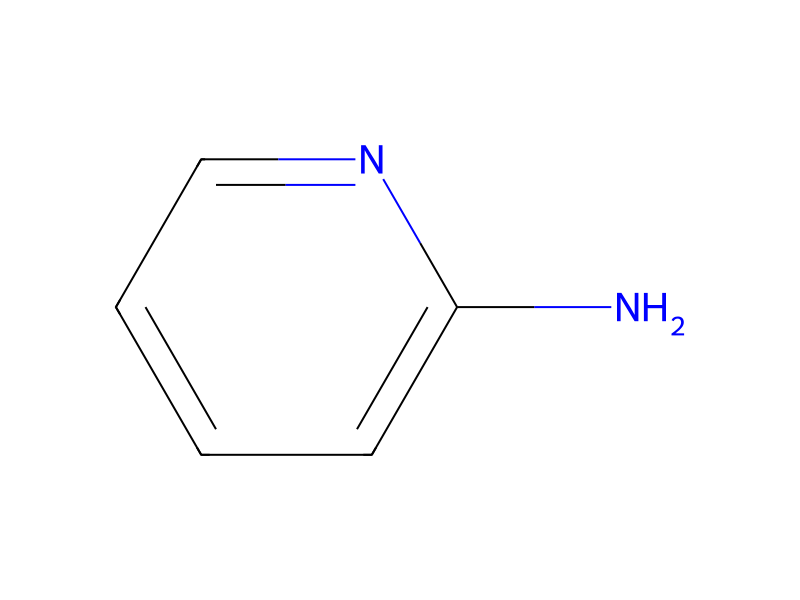

Product 1

Reagents, catalysts & solvents 1

Procedure
To a solution of 2-aminopyridine (94.12 g, 1 mole) and Et3N (167.3 mL, 1.2 mole) in CH2Cl2 (1 L) was added pivaloyl chloride (135.5 mL, 1.1 mole) dropwise at 0° C. The mixture was allowed to warm to RT as the bath warmed. After 18 hr the mixture was filtered. The filtrate was washed sequentially with H2O (1.5 L) and saturated NaHCO3 (2×1.5 L), then was dried (MgSO4)and concentrated under reduced pressure to give the title compound (183 g, 103%) as an off-white solid: 1H NMR (300 MHz, CDCl3) δ 8.28 (m, 2H), 8.00 (br s, 1 H), 7.70 (m, 1 H), 7.03 (m, 1 H), 1.31 (s, 9 H); MS (ES) m/e 179 (M+H)+.
Workup
- temperaturewarmed
- filtrationAfter 18 hr the mixture was filtered
- washThe filtrate was washed sequentially with H2O (1.5 L) and saturated NaHCO3 (2×1.5 L)
- concentrationconcentrated under reduced pressure
Sources & evidence
- ORD record
- ord-d51198592ace483bba6706eb0ca88744
- Source dataset
- uspto-grants-2005_04
- Patent number
- US06881736B1
Reaction notes
Loading…