Water → 1,2,3,6-Tetrahydro-1-(4-nitrophenyl)-4-phenylpyridine
Reaction equation

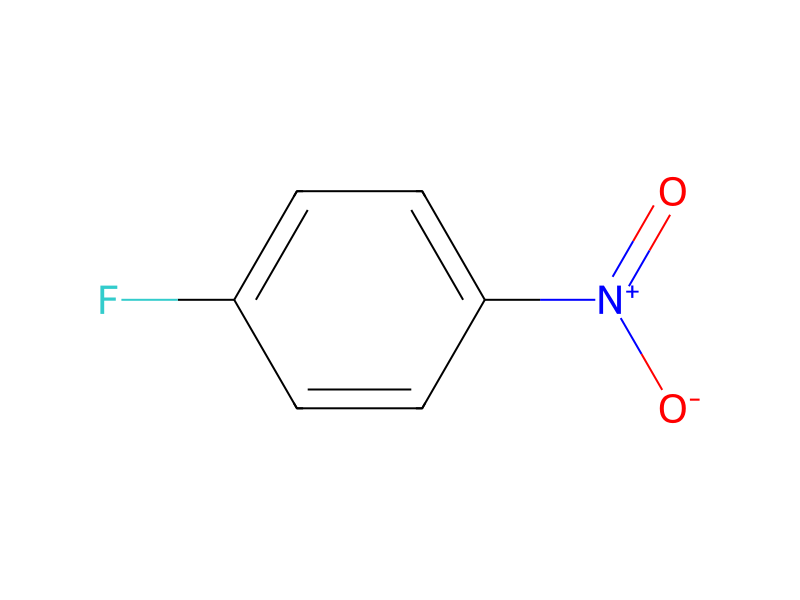
F[C:2]1[CH:7]=[CH:6][C:5]([N+:8]([O-:10])=[O:9])=[CH:4][CH:3]=1.Cl.[C:12]1([C:18]2[CH2:19][CH2:20][NH:21][CH2:22][CH:23]=2)[CH:17]=[CH:16][CH:15]=[CH:14][CH:13]=1.C(=O)([O-])[O-].[K+].[K+].O>CS(C)=O>[C:12]1([C:18]2[CH2:23][CH2:22][N:21]([C:2]3[CH:7]=[CH:6][C:5]([N+:8]([O-:10])=[O:9])=[CH:4][CH:3]=3)[CH2:20][CH:19]=2)[CH:17]=[CH:16][CH:15]=[CH:14][CH:13]=1Participants
6





Conditions
- Temperature
- 100 °C
Procedure
A mixture of 1-fluoro-4-nitrobenzene (2.71 ml), 1,2,3,6-tetrahydro-4-phenylpyridine hydrochloride (5 g) and potassium carbonate (8.83 g) in dimethylsulfoxide (50 ml) was stirred for 1 hour at 100° C. The reaction mixture was pulverized with water. The precipitate was collected by filtration, and dried under reduced pressure to give 4-(4-phenyl-3,6-dihydro-2H-pyridin-1-yl)nitrobenzene.
Workup
- filtrationThe precipitate was collected by filtration
- customdried under reduced pressure
Sources & evidence
- ORD record
- ord-cfadfe820dd24f96bc63d403c8bc1973
- Source dataset
- uspto-grants-2005_04
- Patent number
- US06884868B1
Reaction notes
Loading…