Tris(hydroxymethyl)aminomethane → HCID 16722711, compound
Reaction equation

[F:1][C:2]1[CH:9]=[CH:8][C:5]([CH:6]=[O:7])=[CH:4][CH:3]=1.[CH2:10]([OH:17])[C:11]([NH2:16])([CH2:14]O)[CH2:12][OH:13]>C1(C)C=CC=CC=1>[CH2:14]1[O:7][C@H:6]([C:5]2[CH:8]=[CH:9][C:2]([F:1])=[CH:3][CH:4]=2)[N:16]2[C:11]1([CH2:12][OH:13])[CH2:10][O:17][C@H:6]2[C:5]1[CH:8]=[CH:9][C:2]([F:1])=[CH:3][CH:4]=1Participants
Reactant 2

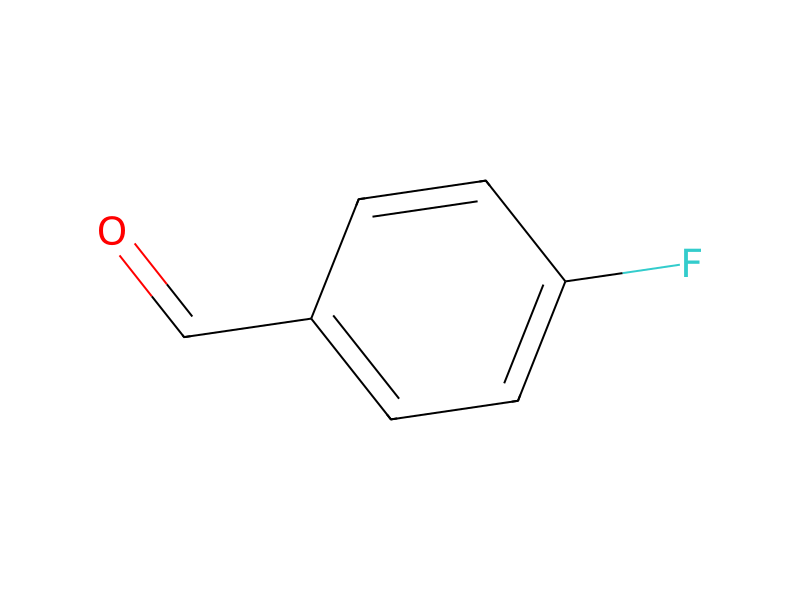
Product 1

Reagents, catalysts & solvents 1

Procedure
As an example, para-fluorinated compounds were prepared. More specifically, a suspension of 4-fluorobenzaldehyde (27 g, 0.22 mol) and tris(hydroxymethyl)aminomethane (13 g, 0.11 mol) in toluene (350 ml) was heated at reflux temperature with azeotropic removal of water for 12 hours. The reaction mixture was concentrated, stirred at room temperature, and the precipitated, unreacted 4-fluorobenzaldehyde was filtered off. The residue obtained after removal of solvent was subjected to flash chromatography on silica gel using hexane:ethylacetate (4:1 and 1:1). Crystallization of the respective fractions afforded pure compounds TH-237A, TH-236B, and TH-OPEN in yields 66%, 5%, and 21% respectively based on an equimolar product distribution ratio. The structures of the products were assigned by spectral data and the relative stereochemistry of TH-237A was assigned from single crystal X-ray diffraction data. The ellipsoid drawing of the molecular structure TH-237A from X-ray diffraction study is shown in FIG. 1.
Workup
- temperaturewas heated
- temperatureat reflux temperature
- customwith azeotropic removal of water for 12 hours
- concentrationThe reaction mixture was concentrated
- filtrationthe precipitated, unreacted 4-fluorobenzaldehyde was filtered off
- customThe residue obtained
- customafter removal of solvent
- customCrystallization of the respective fractions
Sources & evidence
- ORD record
- ord-801e118401ea4bd7987a739345cdc4bf
- Source dataset
- uspto-grants-2009_10
- Patent number
- US07598282B2
Reaction notes
Loading…