Pyridine → HCID 178522645, compound
Reaction equation

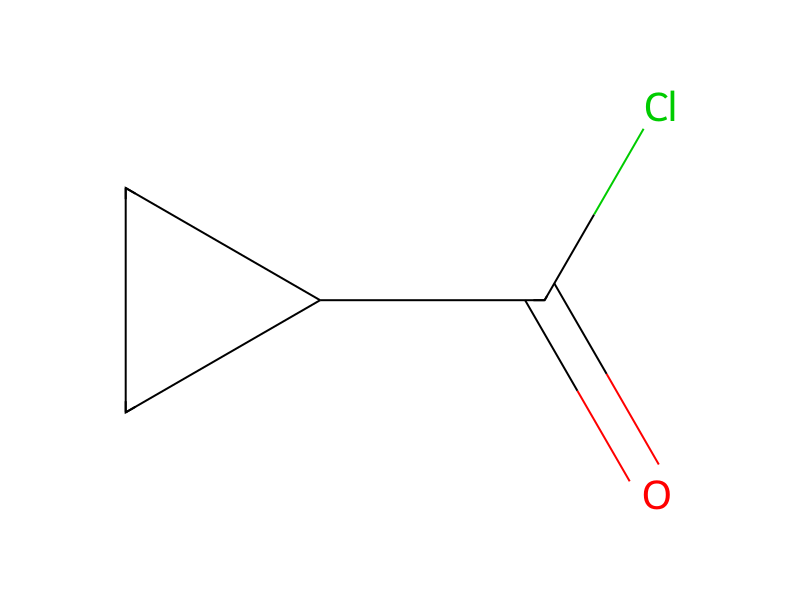
[F:1][C:2]1[CH:18]=[C:17]([F:19])[CH:16]=[CH:15][C:3]=1[O:4][C:5]1[N:10]=[C:9]2[NH:11][N:12]=[C:13]([NH2:14])[C:8]2=[CH:7][N:6]=1.N1C=CC=[CH:22][CH:21]=1.[CH:26]1([C:29](Cl)=[O:30])[CH2:28][CH2:27]1>O1CCOCC1>[F:1][C:2]1[CH:18]=[C:17]([F:19])[CH:16]=[CH:15][C:3]=1[O:4][C:5]1[N:10]=[C:9]2[NH:11][N:12]=[C:13]([NH:14][C:29]([CH:26]3[CH2:28][CH2:27][CH2:22][CH2:21]3)=[O:30])[C:8]2=[CH:7][N:6]=1Participants
5
Reactant 3


Product 1

Reagents, catalysts & solvents 1

Procedure
To a solution of 6-(2,4-difluoro-phenoxy)-1H-pyrazolo[3,4-d]pyrimidin-3-ylamine (45 mg, 0.17 mmol) in 1.7 mL of dioxane was added 14 uL pyridine and cyclopropane carbonyl chloride (21 uL, 0.17 mmol). The reaction mixture was heated to reflux for three hours, then cooled and chromatographed through silica (20%-50% EtOAc in hexanes) to afford 32 mg of cyclopentanecarboxylic acid [6-(2,4-difluoro-phenoxy)-1H-pyrazolo[3,4-d]pyrimidin-3-yl]-amide, MP=206.3-207.51° C., MS (M+H)=360.
Workup
- temperatureThe reaction mixture was heated
- temperatureto reflux for three hours
- temperaturecooled
- customchromatographed through silica (20%-50% EtOAc in hexanes)
Sources & evidence
- ORD record
- ord-cbbda30b7529477581803e3735cf113a
- Source dataset
- uspto-grants-2009_10
- Patent number
- US07601726B2
Reaction notes
Loading…