1-Fluoro-2-nitrobenzene → 3,4-difluoro-N-(2-nitrophenyl)aniline
Reaction equation

[F:1][C:2]1[CH:3]=[C:4]([CH:6]=[CH:7][C:8]=1[F:9])[NH2:5].C([Li])CCC.F[C:16]1[CH:21]=[CH:20][CH:19]=[CH:18][C:17]=1[N+:22]([O-:24])=[O:23]>O1CCCC1>[F:1][C:2]1[CH:3]=[C:4]([CH:6]=[CH:7][C:8]=1[F:9])[NH:5][C:16]1[CH:21]=[CH:20][CH:19]=[CH:18][C:17]=1[N+:22]([O-:24])=[O:23]Participants
5
Reactant 3
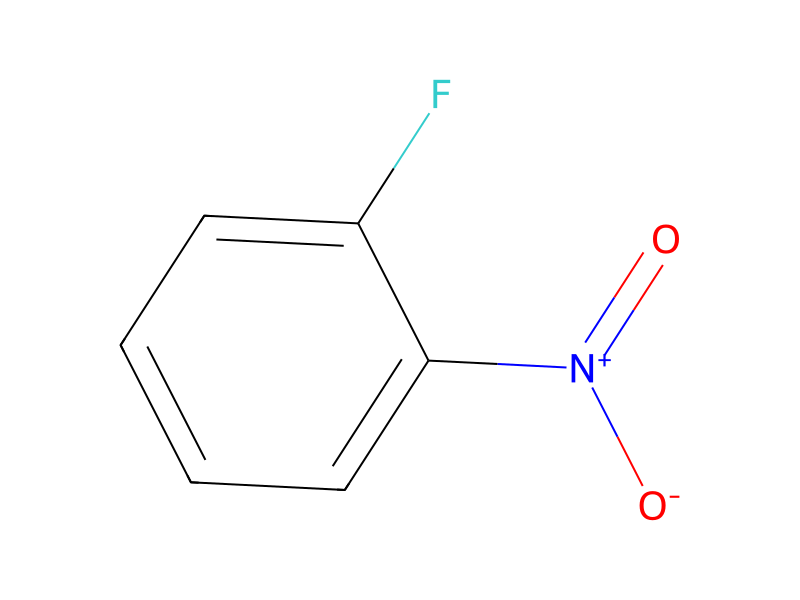


Product 1

Reagents, catalysts & solvents 1

Conditions
- Temperature
- -78 °C
Procedure
A solution of 3,4-difluoroaniline (10.0 mL, 1.0 mol) in tetrahydrofuran (200 mL) was cooled to −78° C., treated with n-butyllithium solution (44 mL of a 2.5 M hexanes solution, 1.1 mol), stirred at −78° C. for 1 h and then warmed to 0° C. for 30 min. The reaction mixture was cooled to −78° C. and 1-fluoro-2-nitrobenzene (9.5 mL, 0.9 mol) in tetrahydrofuran (10 mL) was slowly added and the reaction, after which the reaction was warmed to room temperature. The reaction mixture was evaporated to provide 3,4-difluoro-N-(2-nitrophenyl)aniline (22.76 g, 91%) as a brown solid. The crude product was taken on to the next step.
Workup
- temperaturewarmed to 0° C. for 30 min
- temperatureThe reaction mixture was cooled to −78° C.
- customthe reaction
- temperatureafter which the reaction was warmed to room temperature
- customThe reaction mixture was evaporated
Sources & evidence
- ORD record
- ord-9a654d86d53e4deaab660f060a207f0a
- Source dataset
- uspto-grants-2009_10
- Patent number
- US07601722B2
Reaction notes
Loading…