Diisopropylethylamine → HCID 57893431, compound
Reaction equation

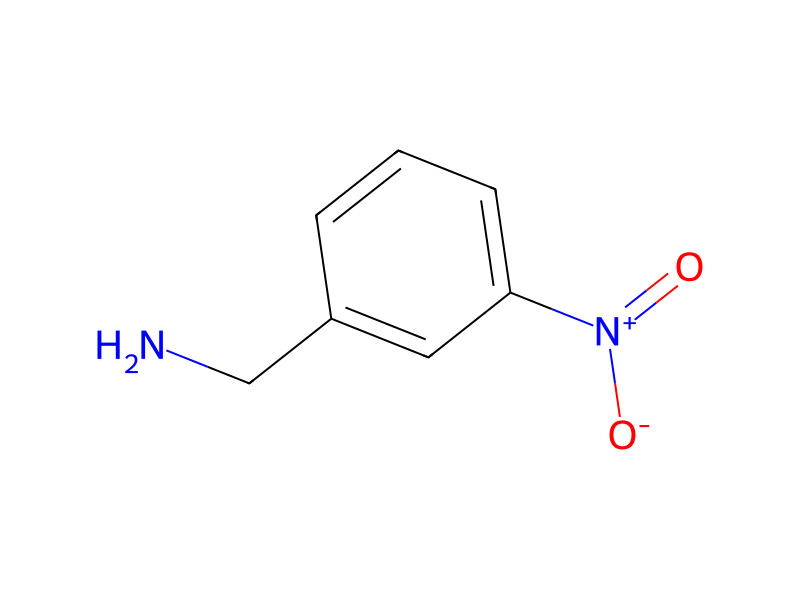
Br[C:2]1[C:3]([NH2:9])=[N:4][CH:5]=[C:6]([Br:8])[N:7]=1.C(N(C(C)C)CC)(C)C.[N+:19]([C:22]1[CH:23]=[C:24]([CH:27]=[CH:28][CH:29]=1)[CH2:25][NH2:26])([O-:21])=[O:20]>C(O)C>[Br:8][C:6]1[N:7]=[C:2]([NH:26][CH2:25][C:24]2[CH:27]=[CH:28][CH:29]=[C:22]([N+:19]([O-:21])=[O:20])[CH:23]=2)[C:3]([NH2:9])=[N:4][CH:5]=1Participants
5
Reactant 3


Product 1

Reagents, catalysts & solvents 1

Conditions
- Temperature
- 180 °C
Procedure
To a solution of 3,5-dibromopyrazin-2-ylamine (253 mg, 1.0 mmol), diisopropylethyl-amine (0.2 mL, 1.5 mmol) and anhydrous ethanol (2 mL) in a microwave tube (Smith process vial, 2-5 mL) was added m-nitrobenzylamine (192 mg, 1.2 mmol). The tube was sealed and heated at 180° C. in a microwave reactor (Smith Synthesizer) for 1.5 h. The reaction mixture was then concentration under reduced pressure and the resultant residue was purified by flash chromatography [silica gel, hexanes/ethyl acetate (2:1)] to afford 5-bromo-N3-(3-nitrobenzyl)pyrazine-2,3-diamine as a brown solid (100 mg, 31%).
Workup
- customThe tube was sealed
- concentrationconcentration under reduced pressure
- customthe resultant residue was purified by flash chromatography [silica gel, hexanes/ethyl acetate (2:1)]
Sources & evidence
- ORD record
- ord-a9a2ea6b34fa420e87072367882e53a3
- Source dataset
- uspto-grants-2009_10
- Patent number
- US07608622B2
Reaction notes
Loading…